Showing posts with label review. Show all posts

Thursday, January 12, 2017

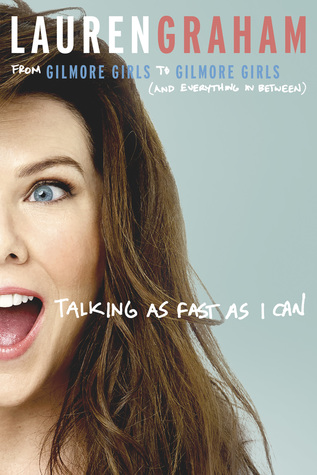
Review: Talking As Fast As I Can


I stumbled upon Gilmore Girls as a teenager and it became Our Show. The show my mom and I watched together, every day/week, through six seasons (my mom never quite made it through season 7). With the comeback of AYITL (:A Year in the Life) and my beloved Gilmore Guys podcast, I heard about Lauren Graham's memoir, read a couple pages while standing in Barnes & Noble, and had to have it.

My history of reading celebrity-penned memoirs is a bit hit-and-miss. They all seem entertaining enough, interesting enough to pass the time. Disappointing in proportion to how excited about the book I was, or how much I like the celebrity in question. I haven't read many, but the ones I have read are decent. And it's not that Lauren Graham's book was leaps and bounds ahead of the others but... parts of it was? Her collection of essays -- about acting, about her childhood, about her personal life, about writing -- are for the most part well-written (sometimes amazingly well-written). Some chapters were more interesting to me and some were less interesting.

It's hard to review this book. Lauren Graham is a good writer and an interesting person, and while I found her notes on the filming of Gilmore Girls mostly real boring, the parts about her boyfriend, about her pre-acting and beginning acting years, about her writing, ranged from oh, this is good to this is incredible!!!!

Tuesday, November 29, 2016

Abandoned Books: Bubble World

I'd been excited to read Carol Snow's Bubble World for quite a while (maybe since it came out). It sounded like the perfect-for-me mix of superficial and sciencey. Unfortunately, it was a lot more A LOT MORE superficial than science and I just couldn't put up with it past page 60. I did flip ahead and read some spoiler-y reviews to find out what happens, but nothing made me want to continue it.

Question to readers: Have you read this book? Have you finished this book? What did you think of it?

Saturday, November 26, 2016

Review: Galgorithm / You Me Us


I have a fair amount of thoughts on this book, Galgorithm. Starting with An Abundance of Katherines I'm kind of a sucker for books where people discover (or try to discover) the formula for love, so the premise of this one - a high school boy who uses his advanced, mathematical understanding of How Girls Work to help his lovelorn compadres capture the girl of their dreams - was perfect for me. Very Hitch-esque.

The cover here is kind of goofy, as is the title, so I wasn't honestly expecting too much from this book. But it was funny! And it was sweet! And it had a few quotable lines! ("I'm feeling a lot of feelings right now, and it's weird.") It was a bit predictable and I never fully felt the core romance between Shane and his female BFF, Jak, but I went with it. Shane was a relatable, slightly-quirky main character, his friendship with Jak was always pretty great (I bought their friendship, it was just the requisite more-than-friends feelings that I had some trouble with), and the various romantic entanglements of his clients were entertaining. I won't lie; this book had me hooked. It's not one I'll return to again and again, but I had a hard time putting it down. And considering the luck I've had with books this year, that's a win.

Note that this book is published as an ebook under the (much better) title You Me Us, and I'm wondering if it might come out in paperback with that title also?

Friday, November 25, 2016

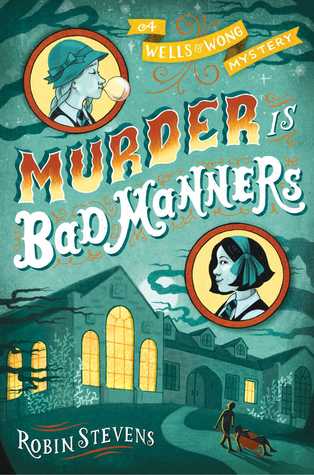
Not Quite A Review: Murder is Bad Manners

This year, for me, reading- and other-wise, has not been great. Is it time for us to light 2016 on fire and wave goodbye just yet? No? Okay. A few more weeks.

Well. In the midst of this year where I read a whole ten books, oh my god, try to hold back your applause for that ASTOUNDING NUMBER (yeah, sorry, the sarcasm is heavy tonight) -- anyway. In the midst of this year, I did discover a little beauty. A gem in the middle of all this madness.


Murder is Bad Manners, the first in a middle grade cosy mystery series by Robin Stevens. On a whim I found and bought this and the second book in the series earlier this year. Now, as with so many wonderful books, these seem to be originally published overseas, which means I don't know if I can actually find the remaining however-many in the series here in the United States. (If anyone knows, LET ME KNOW, although I'm sure finding out online shouldn't be too goshdarn difficult.)

Anyway, back to the book. It's cute. It's charming. It's slightly-creepy. It's murderous. It's lovable. Set in a British boarding school, I wish I could leap RIGHT INTO this book. Yes, even with that nasty business about the murder happening. The second in the series (Poison is Not Polite) is sitting on my shelf right now, just waiting for the perfect moment to be read. I'm thinking later in the winter, during a snowstorm hopefully.

Wednesday, January 14, 2015

Review: The Husband's Secret


To start off with, the reason I read this book. It's due 100% completely to my intense love for What Alice Forgot and wanting to read every single Liane Moriarty book I can get my hands on. (Fun fact! Liane Moriarty is YA author Jaclyn Morarty's sister.)

So anyway. This book. I liked it. I was seriously invested in it. The epilogue was amazing. But as a whole the story wasn't as great as I was hoping for it to be. I don't quite know how to explain it -- partly I think that some of the characters who were really important to the story (most notably Cecilia's husband, John-Paul) didn't feel real to me. I just didn't care about them all that much; I wanted to know how the story itself ended, but I wasn't hugely invested in the characters. Which, after What Alice Forgot, was disappointing.

But let's get to the actual STORY, shall we? Cecilia Fitzpatrick, ultra-organized mother of three and wife to the golden John-Paul Fitzpatrick, finds a letter from her husband -- to be opened in the event of his death. Overcome with curiosity, Cecilia reads the letter (If she didn't, there would be no story, right?) and finds out the secret her husband is hiding. 

Meanwhile, Tess O'Leary has moved back in with her mother while dealing with the fallout from discovering that her husband and cousin/best friend have fallen in love with each other. And then there's Rachel, whose anger and grief over her daughter's death decades ago impacts every aspect of her life. Somehow, of course, you know that all three of these stories are going to come together in the end. I'm not a hundred percent on board with the way these three women's stories finally came together, but it was definitely interesting. 

Alright so. I don't know how to not be spoilery with this review. But I'm going to try! I'm going to succeed! 

The story itself is really something. I was impatient to find out what was going to happen, but I don't know how earned or true various events in the last third of the book felt. Weirdly, I wanted a lot more from Tess' weird love triangle with her husband and cousin, which was probably the least important part of the book. But I liked Tess; I wanted more from her. I also liked Cecilia. And I have to say this... I hate to say it, but I have to be honest... I did not like Rachel. She felt petty and angry and... I mean, her daughter was MURDERED and that murder was NEVER SOLVED. And I can't imagine that, I have no idea how to even begin to feel what that would feel like. So I hate that I didn't like her, but I didn't. Even pushing her decision at the end of the book aside, she was so oblivious to the feelings of those around her (her completely ignoring her son's grief, for instance) and so mean to her daughter-in-law. She just completely rubbed me the wrong way.

I know this is a crap review. It's hard to talk about this book without talking about the contents of John-Paul's letter, and the ending, and so many more really really interesting-but-spoilery things. I did love the idea that our lives can spiral out in so many different directions that we will never know, as was really brought home in the incredible epilogue, which I think I mentioned earlier.

Sunday, January 4, 2015

review: popular


I hate to start reviews off with this sentence, but I just have to. Cue valley-girl squealing here: This book is so cute! At the start of her eighth grade year, social outcast Maya Van Wagenen decides to use a 1950s guide to style and popularity. Yes, it's a quirky social experiment (Maya is unabashedly a nerd), but it's also an honest attempt to rise in the ranks of popularity. Each month Maya puts into practice a new chapter of Betty Cornell's old-school popularity guide. She starts with "Figure Problems" (read: weight) and "Hair" and works her way to "It's a Date" and "Be a Hostess," making daily notes on her successes, failures, and the reactions of those around her. (Pilgrim-style shoes: might make people think you're homeless. Pearls: actually kind of cool.)

Maya is now fifteen years old, which means she wrote this book as a 13/14 year old. I don't like to talk about authors' ages typically, because whether you're a teenager or a fifty-year old, all I want is a good story. Good writing. That said (and trust me, Popular is a good story full of good writing), Popular reminds me so much of my own eighth-grade journals -- quirky social experiment aside -- if my journals were well-written, with dialogue and scenes. That is to say that Van Wagenen's unique view of the world and her place in it rings true; as with any teenager's diary there's the trivial mixed with the big-picture. Dieting and makeup mixed with neighborhood drug dealers and school lockdowns. And amid all of this are the kind of smart teenage insights that many of us sadly tend to forget about as we grow up and disavow our younger days. This book is a reminder that teenagers can be just as stupid, and just as insightful, as grown-ups. 

I loved this book. Yes, there are cheesy parts -- one scene in particular made me think of High School Musical's level of all-in-this-together cheese. But, you know, cliches are cliche for a reason. Maya's gung-ho, fighting attitude is something to aspire to, and her growing confidence over the course of her experiment is a good reminder that yes, we can change our situation. Yes, we can change ourselves. Yes, it is possible.

I know, I know. I'm getting sentimental just talking about this book. But it's good! So good! So wonderful! Maya Van Wagenen, you are incredible and your book is awesome.

Saturday, January 3, 2015

review: 17 & gone


Note: It's really hard to talk about this book sans spoilers. I've written a more spoilery review that you can read on Goodreads, but have tried to keep this spoiler-free.

It started with one girl -- Abigail Sinclair. First, Lauren saw the MISSING poster tacked up on a light pole, and then she saw her. Abby, whispering in her ear, riding beside her in her van, asking for help. After Abby there was Fiona, then Natalie, then other girls, so many of them Lauren stopped counting. All of them gone (missing or runaway), all of them 17, all of them -- except Abby -- dead. Abby's the one still out there, still alive, the one Lauren has to save. If she saves Abby maybe she can save all of them, maybe she can save herself. Because Lauren is 17 also, and she knows it's only a matter of time before she, too, disappears. 

I have conflicting feelings about this book and it's hard to talk about without spoiling the "twist," but I'll try to talk first about the things I CAN talk about. 

For starters, this book sort of dragged on. It was, dare I say... boring. Girl after girl appears to Lauren and we hear their stories -- what their lives were like, when they disappeared, what they were wearing when it happened. On and on. It quickly gets repetitive and slows the book down as I waited for something to happen. I had heard this book was creepy, which it was. I'd also heard it had a twist, which... I'll just say it: to me, that wasn't a twist. That was obvious. That was inevitable. And it was unsettling.

Summer's descriptions of the girls, of their interactions with Lauren, are so good. For some readers, probably too good. Because right from the start there's a distance between Lauren (the narrator) and the reader. There's a thick fog, an inscrutableness. Lauren is not a protagonist you fall into step beside; she's one you can't quite figure out, one you might be a little scared of. Lauren's world is peopled by ghosts and half-truths and it's hard to grab onto anything solid. Her personality is buried somewhere deep, deep under her experiences and throughout the whole book we never quite reach that far to really see who she is. I've read reviews from readers who didn't like this, but for me it hit as incredibly, startlingly truthful. I didn't always love it, but I'm still glad I read it.

Thursday, August 22, 2013

review: you look different in real life

You Look Different in Real Life was definitely one of my most anticipated books this year. I had high hopes, high expectations for this incredibly interesting story of a girl (along with four of her classmates) whose life has been, every five years, the subject of a documentary along the lines of the British Up docu-series. (As a side note, I love this series and highly recommend it; many of the films are on Netflix and well worth watching.)

Justine, who has always been the viewers' favorite, is sixteen and facing the third film (Five at Sixteen), but this time she's dreading the camera's intrusion in her life. She's not who she thought she'd be by now, and although she professes to hate the movies and cameras, she also doesn't want to disappoint. This idea of not being who she wanted to be by sixteen is oner that I wish had been explored more in-depth, instead of given only a few lines of space, because it's a really interesting idea to me. Who we are and who we want to be. And, when the whole thing is captured on film for the world to see, how much harder is it? I wanted more of that, which ended up being my big problem with the book; it's full of so much stuff that the really interesting bits ended up buried with the more dramatic plots were what took center stage.

Despite the fact that Justine is the narrator and main character, there are four other important characters in this book, and each of them has their own stories and journeys that the book follows. Unfortunately, many of these stories seemed superflous and not every character shone the way I think they were probably supposed to. Kiera especially seems to be the fifth wheel here; although the big thrust of the main plot comes from her actions, her character is never clearly defined and her storyline seems both too dramatic and too convenient to really have an impact. A few of the events and storylines felt a bit shoehorned in to me: Kiera's story, Felix's (incredibly obvious) twist, Justine's sudden need to film everything when just pages ago she'd hated the cameras. Like I said, there was a lot here, and much of it didn't seem to work.

Which isn't to say the book as a whole didn't work, or that I didn't like it. Because I did. Despite how convenient many of the plot points felt to me, the characters' commitment to each other, even though they didn't all get along day-to-day and even though there had been some pretty big rifts in their friendships, shone through. From the moment the camera crew is back in their lives there's a sort of under-the-surface solidarity between the five docu-stars, almost an us versus them attitude that went far in establishing these characters' lives and relationships. It's Rory (Justine's ex-best friend, who has been diagnosed with Autism since the last film) in particular that brings this unity to the forefront; she sticks with the other four even when it would be so much easier, for so many reasons, to just not. Her matter-of-fact way of stating things is incredibly refreshing in a story where there's so much that goes unsaid.

This is a solid contemporary YA, though not without its faults. To be perfectly honest I think that my issues with it may stem from the fact that it was just a bit more plot-driven than I wanted or was expecting, which is probably going to work for a lot of readers.

Wednesday, April 17, 2013

review: if he had been with me

IF HE HAD BEEN WITH ME
Laura Nowlin
Sourcebooks Fire
A few things to start off with, the first being that I really don't know how to review this book. It sits in extremes for me; there was a lot I loved, but there was also a fair amount that didn't sit well with me and at least one scene that I skipped over entirely. Secondly though, author Laura Nowlin is an incredible writer and I'll definitely be looking for whatever she publishes next.

If He Had Been With Me is a story stretched out over four years, of Autumn and Finny, who used to be best friends but aren't anymore. Though they were inseparable all through middle school, it's now high school and pretty-but-weird Autumn has formed a close knit group with other misfits while Finny (Finn, to everyone but Autumn) is athletic, preppy, and popular. Despite the closeness of their families and the fact that they spend every major holiday seated around the same kitchen table, Autumn and Finny don't seem to have much in common anymore. Finny's dating a popular girl while Autumn has a long-term boyfriend, king of the misfits. Of course, it's obvious to the reader, if not to Autumn herself (the book is from her POV) that she belongs with, and is in love with, her boy-next-door, Finny. And though it's inevitable that Autumn eventually comes to this conclusion on her own, she spends an inordinately long amount of the book with Jamie, being in love with him. Or at least trying to convince herself that she's in love with him. The two have plans to get married, buy a house, have kids, and though Jamie's all in, it's obvious that Autumn is only in because she regards her feelings for Finny as a fantasy that can never come true; in real life, good-enough is all you get, she reasons.

Autumn is not a very happy person. (I could get into more detail about this but it would ruin certain aspects of the book and its plot, I think.)

This is an incredible sort of book. The writing is amazing, the characters are so, so well done, and the whole thing has a very hazy, beautiful but inevitably tragic feel to it. The book's strange attitude toward sex (it wasn't entirely casual, but it wasn't really not-casual either, so I'm having a hard time landing on an accurate word for how this book handled the issue) bothered me, and I found myself skipping certain scenes, one in particular. This is not a book about sex, but it did play a role in the story. In addition to this, Autumn's insistence that she's in love with both Finny and her boyfriend Jamie bothered me. It reminded me of all the reasons I hated the movie Doctor Zhivago. For much of the book Autumn remains oblivious to her own feelings toward Finny, and this got old, especially the longer she stayed in her lukewarm relationship with Jamie. Autumn is a needy character, but for some reason it took quite a while before I realized just how needy.

Though part of the ending is obvious from the beginning (almost from the title, really), but another part of the ending came as a shock. For those who've read the book, yes, it was definitely foreshadowed, but I found it hard to believe that such a sweetly beautiful book would actually take that route. I root for happy endings, and this one shook me. Though it's possible to view the ending in a hopeful way it's hard for me to move beyond Autumn's actions and reasoning. So like I said, this was a difficult book for me. It's a well-written and beautiful story with love as the huge, overarching theme. But there were aspects of the book that bothered me -- it wasn't enough to make me abandon the book, but definitely enough to affect my feelings toward it -- and the ending felt both obvious and incredibly, incredibly depressing. (And in at least one respect, unrealistic.)

Monday, April 15, 2013

review: this is what happy looks like

THIS IS WHAT HAPPY LOOKS LIKE
Jennifer E. Smith
Poppy
The Statistical Probability of Love at First Sight was a really good book, but I wasn't floored by it the way so many others seem to have been. I liked it a lot, but didn't love it. Still, when I first saw This is What Happy Looks Like on Goodreads with a comparison to You've Got Mail, I put it at the top of my must-buy list. (YGM is my faaaavorite movie of all times ever.)

And let me tell you: for me, This is What Happy Looks Like blows The Statistical Probability of Love at First Sight out of the water. The story (told in alternating third-person perspectives) of a girl in small-town Maine ending up an accidental e-pen pal to a boy whose identity she doesn't know is great. Of course there are plenty of opportunities for internet safety speeches here, but the book doesn't take that direction because this is a book about sweet and unexpected love. Ellie and Graham follow the You've Got Mail rules of not revealing anything personal in their letters (although Ellie does accidentally let the name of her town slip), which means that when Graham shows up in Ellie's hometown to shoot his new movie she has no idea that this is the boy she's been emailing. And Graham has no idea that for Ellie, being in the spotlight seems like the worst thing in the world. The secret of Ellie's camera-shy personality is one that in other books could have come across as overly dramatic or heavy-handed, but here is handled exactly perfectly well. Her reasons, when they come to light, aren't as deep and dark as they could have been and fit in well with the rest of the book, with her and her mother's reaction to Graham's fame.

I've said multiple times that a book has to be more than just "cute" or "entertaining" to make me really fall for it, and based on that and how utterly sweet this story is, you'd think this would be an easily forgettable book for me. But it's not. This is What Happy Looks Like is the best sort of romance; it's sweet and funny. The characters are loveable. The more unrealistic aspects are more than made up for by the fact that the emotions felt by these characters are so utterly relatable. These are the most universal of feelings: love, friendship, infatuation. And This is What Happy Looks Like relies on these themes/feelings (along, of course, with Jennifer E. Smith's great writing) to make the unrealistic premise work really, really well. It's a sweet, adorable, wholesome romance that I totally fell into. In short: I loved this book. It's the best sort of YA romance and if this review doesn't seem to do it justice it's just because beyond omg so cute so good awwwwhhh!!! there's really no better way to describe or explain how I feel about this book.

(Also you can note that this is the first five-star book I've read in all of 2013. Step it up, year.)

Monday, April 8, 2013

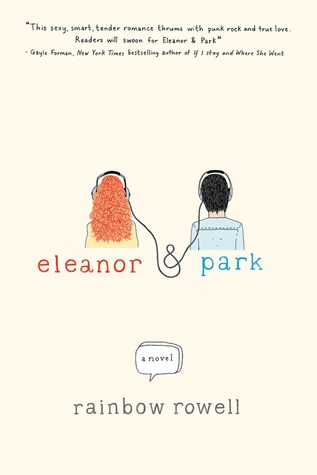
review: eleanor & park

ELEANOR & PARK
Rainbow Rowell
St. Martin's Griffin
I'd heard wonderful things about Eleanor & Park. Heard that it was great and beautiful and painfully good, really. But I tend to regard these books that get rave reviews with a certain amount of suspicion; still, reliable fellow bloggers loved this book so I thought -- hoped -- that I would, too.

It didn't quite turn out that way. Eleanor & Park is well-written, no doubt about it. It's an angsty, awkward story of first love set in the 80s. And it is beautiful, at least in parts. The slow-then-quick falling of Eleanor and Park into love adds to the general feeling of desperate, inevitable angst. But Eleanor & Park is not only a love story; it's also the story of Eleanor's horrible home life. The stepfather who kicked her out once (for a whole year) and who now rules and abuses her family -- her mom, as well as  her four younger siblings. There's a constant sense of fear and danger surrounding Eleanor's life, one that gives the rest of the book an uncomfortable edge. This isn't just, as the front cover claims, a love between misfits; it's also the story of a desperate teenage relationship at odds with emotional and physical abuse.

Though I enjoyed the story between Park and Eleanor, and the dynamic of Park's family (especially when it came to Eleanor), neither of the characters really made that big of an impact on me. I liked them fine, but it was the details of their story that I really enjoyed: the comic books and music they shared, their phone conversations, and how incredibly nice Park was to Eleanor, especially in the beginning when he didn't have to be.

That said, there were some things in this book that didn't sit well with me. The headlong, hasty rush into True Love felt... well, not-quite-true. It felt immature. Like teen love, sure, but not the sort of teen love that would last. Aside from that there was also quite a bit more vulgarity in this book than I was expecting. I was taken aback by the very liberal use of cuss words, especially when neither of the main characters spoke like that themselves. And though I used to think that cussing in books wasn't something that especially bothered me, this book proved me wrong; the too-often-used vulgarity put me off a book that I otherwise would have enjoyed quite a bit more, though I may be in the minority here.

There was a lot to love about this book, not least of all it's solid writing and the natural way the story was allowed to progress. But there was also quite a bit I could have done without, such as the cussing, the immaturity that was supposed to pass for maturity even in the eyes of the adults in the novel, and the fact that I didn't care enough about either of the main characters.

Saturday, April 6, 2013

review: take me there

TAKE ME THERE Carolee Dean
Simon Pulse
I started Take Me There with high hopes. Despite the fact that the cover and back-page summary made it seem like an opposites-attract romance, it quickly became clear that this was really the story of a teenage boy determined to turn his life around -- and I liked that theme. Dylan Dawson Jr. is 17 and has already been in juvie, already been involved in a chop shop and associated with a gang. But now he's out of juvie, along with his best friend Wade, and he's determined to go straight. To not wander down the same path his dad -- who's on death row for killing a cop -- went down. But when the gang finds him again they make it difficult for him to stay on the straight and narrow and one night, through no fault of his own, he ends up on the run. From the gang member that's after him and the cops that are probably looking for him. He heads for Texas, where in less than a week his dad will be executed. Dylan has to know if the badness inside of him is something he was born with, something impossible to outrun, or if it's something that can be changed. He has to know the truth of why his dad is facing execution.

(Oh yeah, and also he can barely read. That's important too. Although he loves poetry and has memorized many of them (and even creates his own), actually reading is incredibly difficult for him.)

It's obvious from the first page of this book that Dylan is essentially a good guy. He wants to turn his life around and is doing everything he can to make sure that happens. His romance with the beautiful, rich Jess was alternately incredibly sweet and incredibly unrealistic. But despite what the summary would lead you to believe, his love for Jess is only part of Dylan's story -- more important is the road trip he takes with Wade to see his father again and get answers to his questions. The answers (and even the questions themselves) quickly become more complicated as Dylan realizes that the reason for his father's incarceration isn't nearly as cut-and-dry as he always thought. It's clear, too, that Dylan's dad is a good guy. He is repentant and trying in so many ways to right his wrongs. There are huge themes of repentance, forgiveness, mercy, and justice running through this novel.

Which is why the ending was such a colossal dissapointment. I don't want to give anything away, but I will say that up until the novel's conclusion I was for the most part enjoying this novel despite the few issues I had. (Most of my issues up until this point had to do with 1. the quick escalation of Dylan and Jess' relationship in a certain chapter, as well as how unrealistic much of their relationship felt on Jess' side, and 2. how heavy-handed the link between illiteracy and criminal activity often felt.) However, I felt that the book's ending was at odds with the story that came before it, taking the important themes that the book had explored so well and tossing them aside for a possibly-realistic, but definitely discouraging ending.

Friday, February 1, 2013

review: out of the easy

OUT OF THE EASY
Ruta Sepetys
Philomel Books
(ARC received at ALA12)
There are some books that are objectively, almost undeniably very good. Ruta Sepetys' first novel, Between Shades of Grey was that kind of book. It was powerful and beautifully-written. But then there are other books that get away from the objective and on a personal level you just love them. For me, that's Sepetys' upcoming second novel, Out of the Easy. Set in 1950s New Orleans, this is a book that's more about a place, time, and atmosphere than it is around a historical event. Josie Moraine is a smart and good-natured girl stuck in a set of bad circumstances. Her mother's a prostitute who sees Josie as a burden (despite the fact that Josie hasn't actually lived with her mother since she was 11 and has instead kept her own apartment above the bookstore she works at); the owner of her bookstore is getting sicker and sicker; and Josie's chances of getting out of New Orleans and attending college are slim to say the least.

Josie herself is an awesome protagonist -- smart, sweet, down-on-her-luck, and entirely believable. Her story is helped by the cast of similarly lifelike characters around her, from the son of the bookstore owner to Willie, the madam who runs the brothel her mom works at. Despite the fact that Josie's ignored by her mother, she does have plenty of others who care about her -- it's just that her dreams and goals for her life don't quite match up with theirs.  Willie would be happy if Josie were her housemaid forever, but Josie longs to live in a place where everyone doesn't think of her as trash. I'm wary to give too much of what happens away so I won't get into the details of the plot, but I will say that this is one of the finest, most interesting historical novels I've read. While Josie's a great character and her journey is plenty interesting, the heft of this book's strength lies in its setting and atmosphere. The seedy of New Orleans is wonderfully realized here -- dusty, desperate, and incredibly well-written. Historical fiction is often difficult for me to really get into, but this one was just great; it hit all the right notes. Out of the Easy hits shelves February 13th, 2013.

Wednesday, January 30, 2013

review: prodigy

PRODIGY
Marie Lu
Putnam Juvenile
(ARC received at ALA12)

Prodigy is the sequel to Legend, one of the best dystopian novels I've read in the last few years. In this middle book, June and Day have teamed up and are off to find the Patriots, who are eager to start a rebellion against the Republic and, in return for helping June and Day, give the two outlaws the task of assassinating the Elector Primo. But the old Elector has died and in his place is his son, Anden, who disagrees with many of the policies his father enacted. As June gets to know him, and his plan for their country, she finds it difficult to go through with her part in the assassination plot.

I'm going to be honest here and say that, compared to Legend, Prodigy was a disappointment to me. Though there's still the strong emotional connection to the characters and their deep love for their families, this gets a bit muddled as June and Day join up with the Patriots and get swept up in the upcoming rebellion. Their romance, which worked well for me in Legend, falls prey to a few overly-cliche YA tropes here: the quick declaration of love, sudden love triangles, and an emphasis on their romantic relationship and feelings for each other that detracted from the rest of the story. The more I read, the more convinced I was that June and Day don't really belong together and I wished the book had focused more on how the Republic and the Colonies came to be than the romantic entanglements of its leads. Which, coincidentally, brings me to another small issue I had: in Legend I seem to remember nobody really knew if the United States had been a real nation or not; here in Prodigy there are a few references to the United States as if everyone knows the history of the Republic and the Colonies. This confused me and I wound up feeling like we'd somehow skipped over a chunk of June and Day's learning as they discovered more about their history. I wanted this "mystery" of the USA to be explored a bit in Prodigy and instead what I got was a fairly action-driven story of secret alliances, betrayals, and a plot to kill the Elector Primo. It becomes clear that there is no good answer for June, Day, and their country. This is entirely my preference, but I didn't love that. While it makes perfect sense that both the Republic and the Colonies were messed up in different ways, the fact that every single character in this book was corrupt in varying degrees bothered me; I like having a good guy to cheer for, not just a "lesser evil," and neither June nor Day remained as principled or good as I remember them being in Legend. In particular June's evolving feelings toward Thomas bothered me.

I was eager to discover more about the world June and Day live in, and how our world became theirs, but Prodigy was mostly concerned with what was currently happening to them, and though the twist near the end was supremely well-executed (probably enough for me to pick up the third book in spite of my issues with this one), I still didn't love Prodigy. I'm sure this book will work well for others; for me it seemed to be mostly the fact that I was expecting a very different book than the one I got.

Thursday, December 13, 2012

review: love and other perishable items

LOVE AND OTHER PERISHABLE ITEMS
Laura Buzo
Knopf Books for Young Readers
(ARC picked up at ALA)
Amelia's 15 and Chris is 21, but she still can't help falling entirely, head-over-heels for her coworker. Surrounded by vapid and/or otherwise-lacking coworkers, the two strike up a friendship that only feeds Amelia's feelings and makes Chris confused about his own. They get along, they talk about real things, but at the end of the day there's still a very vital six years between them. Set in Australia and told from the dual perspectives of Amelia and Chris, this is a love story... sort of.

It probably comes as a surprise to absolutely nobody to learn that I'm not a big fan of "edgy" content -- sex, drug use, and too much profanity can really ruin my reading experience. (And this is not meant to be a rah, no sex-drugs-cussing statement -- just that I don't and never have liked reading it.) And this book had much more of that than I was expecting. There were a few scenes in particular that, if I hadn't loved the characters and their story so much, would have made me put the book down. So I'm a little torn in how much I actually like this book; despite it's adorable cover, it's maybe not something I'd give to your more sensitive readers.

Having said that, this book surprised me. In so many ways. I was surprised at the content (in a bad way), I was surprised at the dual POV (in a good way), I was surprised at the depth and the sadness (also, in a good way). Laura Buzo has made a relationship that could easily, easily be totally skeevy something you end up rooting for. Part of this is the fact that Amelia and Chris are both great characters and despite their age difference they really do get along very well, and part of it, I think, is that Chris' feelings are much less defined than Amelia's. Even he doesn't know if his feelings for her are of a romantic/sexual nature or if it's simply friendship and the fact that she's so different from most of the people he finds himself spending time with. In a big way this book reminded me of an earlier YA novel, Just Like That, by Marsha Qualey. (I'd recommend that for fans of this book.)

Aside from Amelia and Chris' story together, they each have their own lives happening. Both of their families and friends, but especially Amelia's, are hugely present. Chris, at 21, is watching his friends graduate and get jobs that pay well while he's still living at home, stuck in a sort of ennui, unsure what to do with his life and feeling stuck in suspension. It's a very realistic, very relatable feeling and handled so well. Amelia, on the other hand, is just trying to make life easier for those around her, especially her over-worked mother, and contemplating the essential questions of life and love, like how unfair Gatsby-style impossible love is, and how it sucks that her mom has to work full time and take care of everything else in the house while her dad refuses to even load his dishes. As with Chris' situation and feelings, Amelia's contemplation and anger is handled in a really, really great way. Buzo has talent for creating realistic and interesting characters that stand out.

This is one of those books that, for me, was made of extremes. The parts I liked I absolutely loved, but the parts I didn't like hard to get over. Although in this case my issues are subjective and entirely taste-driven, so others may not have the same hang-ups. For those looking for a completely character-driven novel that tackles some unlikely subjects, this may be exactly what you're looking for. But fair warning: it's sadder than you think it'll be.
Wednesday, November 21, 2012

review: dear teen me

DEAR TEEN ME
Edited by E. Kristin Anderson
Zest Books
(ARC from ALA Annual)
I'll admit that I rarely read every entry in anthologies; I'm much more likely to skip around, reading the stories that catch my interest and skipping over the others.

I made an exception for Dear Teen Me, a collection of letters from YA authors to their teenage selves. And while I love (love!) the idea behind this book, the actual product didn't blow me away. While there were some letters that were more powerful, interesting, or inspiring than others (I definitely have a few favorites), the book itself has an odd sort of feeling and after thinking about it I've decided that the book itself is just a little bit... off. The letters are personal letters from the authors to their past selves, but they're also writing for an audience, which makes everything a little different. For one thing you have to explain things to an audience that you never have to explain to yourself. For another thing I often felt that the letters were, in some cases, less honest and unguarded because of being written for an audience. (I mean, I don't know if they actually are less honest, but that's how I felt reading some of them.)

But, like I said, there were definitely some stand-outs and also a good amount of diversity in the letters. And when I say diversity I mean that while some letters are full of advice from the future, others are a telling of a memorable event that happened in their teen years. And while many of the letters blended together for me, there are some that really stand out. Jessica Burkhardt. Sarah Ockler. Hannah Moskowitz. Robin Benway. Sara Zarr. Ellen Hopkins. So while I didn't love the book, it's worth checking out just to see which essays will end up being stand-outs to you.

Thursday, November 1, 2012

Review: Miss Fortune Cookie

MISS FORTUNE COOKIE
Lauren Bjorkman
Henry Holt and Co.
ARC received from publisher
Senior year for Erin, the anonymous blogger behind the wildly popular Miss Fortune Cookie advice column blog means college acceptance (or rejection) letters; finally fixing the messy past she has with her ex-best-friend-turned-current-best-friend, Mei; and stumbling into a possible romance of her own after so long being the only single girl in her trio of best friends.

This book is just as adorable as the cover leads you to believe (I mean, Erin answers the letters on her advice blog with fortune cookies), but there's a lot going on. From college decisions (Erin made a pact with Bestie #1, Linny, that they'd both attend UC Berkeley before college letters even went out, only to later question if that's the right decision) to the history between Erin and Bestie #2, Mei, who dropped her as a friend years ago and even since rekindling their friendship (thanks in large part to Linny), they've never been as close as they once were. When Mei finds herself stuck between the boyfriend she's head-over-heels for and her mother who insists she attend Harvard (instead of Stanford), even though it's on the other side of the country, Miss Fortune Cookie gets a letter that sounds like it could be from Mei herself. In addition to these plotlines, Erin also worries over leaving her mother alone when she goes away to college, and struggles with her deep love for Chinese culture despite being white. So yeah, there's a lot happening and though it's all wrapped around Erin and her alter-ego as Miss Fortune Cookie, I did have a few problems with various storylines (more on that later).

I'm tempted to cover this book in the vague, often-annoying adjective of cute, but that doesn't quite do it justice. The truth is, Miss Fortune Cookie is cute in the best sort of way -- in the way that Tweet Heart or Sequins, Secrets, and Silver Linings. It's the sort of cute that's full of heart and a sort of "feel-good" book that I can see myself reading again in the future. Erin is a smart, sweet, good-natured protagonist you can't help but root for and her two best friends are equally likable, despite their missteps along the way. That said, there were so many storylines here that were emotional and important but that ended up being wrapped up neatly, and too quickly for my liking. For instance, the heavy history between Erin and Mei is a subplot I wanted more from, especially as it was weighted down with race, culture, and the pain of being rejected by a best friend. Instead, this was solved quickly and much of the book was devoted to a counterprotest Linny was setting up at the girls' high school, which was a subplot I kept expecting to go somewhere and when it didn't I was disappointed mainly because without a payoff it felt so completely out-of-place with the rest of the book.

Still, despite the book's imperfect plots and subplots, this story is so easy to fall into for the simple fact that Erin herself is such an inviting character. I was easily swept up in the book because Erin is the best kind of "adorable YA" character -- the kind that pulls you alongside her, right into the story. It helped, of course, that the Chinatown setting is written so, so well and gives the characters and story more depth. If you're looking for a beyond-cute realistic YA read with just a hint of romance, give this one a try. Miss Fortune Cookie is set to hit shelves November 13, 2012.

Thursday, October 11, 2012

Review: Time Between Us

TIME BETWEEN US
Tamara Ireland Stone
Hyperion
ARC from ALA Annual
Anna Greene, a nineties teen (1995, to be exact) stuck in the suburbs of Chicago, dreams of traveling to far-off places  after high school. When she falls for the new guy at school, she gets a chance for her wish to come true even sooner, but not in the way she'd imagined. Because the boy, Bennett Cooper, is a time traveler. And if not for a mistake in time, he wouldn't even be in 1995 -- instead he'd be at home in present-day (2012) San Francisco.

Time Between Us is the sort of book that just looks so full of promise. Romance, a nineties setting, and time travel -- what more could a 20-something female YA reader want? Well, in this particular case I did want more. Of everything. Let me state at the outset that I like this book. It's a nice mix of emotions, light sci-fi, and enjoyable romance. Anna Greene is no Mary Sue; she's smart, independent, and full of dreams for herself. Likewise Bennett Cooper is a wonderful mix of awkward and cute (and also my favorite character in the book). Their romance is cute, fairly predictable, and clean enough that I'd have no problem handing this book off to young teens.

The problem is that the book, at least in my opinion, lacks spark. I liked these characters, but never really really felt for them the way I like to feel for characters in stories. And while the time travel was set up nicely, with rules that guided it (I love when time travel has rules to it), the vast majority of the book takes place in 1995 and Anna's curiosity about the future -- hers and the rest of the world's -- never reaches the level that I'd assume it would. While she wants to go other places, she's oddly disinterested in discovering other times. Which brings me to another complaint, though I admit it's a superficial one: where are all the 90's references? I mean, this book takes place smack-dab in the middle of the decade, yet there are so few references to anything 90's that it's often easy to forget Anna's story doesn't take place in 2012. For adults reading the book out of nostalgia, this will be a let-down and for teens who are interested in the 90's setting, there's not a whole lot to latch onto.

It takes a while for Time Between Us to really take off and even when it does there's nothing earth-shattering in the way of plot twists or the stakes of the story, but it reminded me of The Future of Us in the way that it slowly, deliberately considered the effect that changing the past has on the future and how small decisions can cause a ripple effect across time and lives. Bennett is incredibly precise in his time travel and his interest in the butterfly effect were parts of the story that I absolutely loved and I wish they'd played a larger role, especially in the first half of the book. Anna's story is charming and definitely readable, but unfortunately never shot off into must-read status for me, though I know many others have disagreed.

Monday, October 8, 2012

no more review books.

This has been coming for a while now. For quite some time I've felt increasingly disinterested in the vast majority of the review pitches I get and even most of the books sent to me by publishers. I think it has to do with how selective (or you could say picky) I am as a reader, but it also has a lot to do with the fact that I have a wishlist 50+ books long and I'd much rather spend my time reading those books than ones I'm sent for review in most cases. Every book I accept for review is a couple hours, at best, that I will spending reading and reviewing that book, without feeling as free as I normally feel to set it down if it loses my interest.

So with all of this along with the fact that my life just got a lot busier, I've decided that I will not be accepting review books for the foreseeable future. I'll still be reviewing, rest assured -- but I'll be reviewing the books I really want to read. Books that I beg, borrow, or (most often) buy for my own enjoyment.

I have a few review pitches in my inbox right now that I'll be responding to, but from this point forward, I will no longer respond to review pitches. (Well, until and unless I open myself back up to review books.)

Thursday, October 4, 2012

Review: Fangirl

FANGIRL
Ken Baker
Running Press Kids
(ARC received at ALA12)
Fangirl is not a perfect book.

I have to say this at the outset because I have so many great and wonderful things to say about this book that I just feel like you need to know that I do, in fact, realize it's not perfect. I know that plausibility is stretched in some cases, that Josie's dad's story felt too convenient and mostly unconnected from everything else. I know that. But here's the thing: while it may not be perfect, Fangirl comes kinda close, at least for me it does. The story of Peter Maxx, a teen superstar (think Justin Bieber) and Josie Brant, the music-loving, song-writing high school girl who falls in love with him falls squarely under that term I loathe: fluff. The book is cute, entertaining, light... all those things that are sort of backhanded compliments in the world of books. But it is so much better than that.

Fangirl stands out from many other celebrity-focused novels by its complete commitment to the characters at the center of the story. Despite being steeped in the lives of the rich and famous, it never reads in the glitzy, distanced, tabloid-esque way that it very easily could. Ken Baker is the head news correspondent for E! News, and his knowledge of the subject (fame! celebrities!) gives the story a realism it might not have otherwise. He pushes past the trappings of a celeb-inspired novel to get to the characters, emotions, and relatability underneath.

Peter has the sort of backstory that on a reality show would be milked for all it's worth: his dad's own musical career burnt out years ago and his mom died, so he's famous and beloved, but also imperfect. While Peter loves making music (and would love it even more if he had a little more creative control...), he hates having to be "on" all the time and this, mixed with grief over his mother, makes him a bit of an anxious mess. And this is played out so well without being overlooked and without taking over the book. Meanwhile high school Josie has her own personal problems, most of them stemming from her parent's divorce. Both of these characters (Peter and Josie) have anxiety problems and though it's nothing incapacitating, they're handled in a way that adds dimension to their characters.

Mostly though, what this is is an adorable love story between a teen popstar and a (as the title says) fangirl. Their romance plays out in the typical 21st century ways -- through Twitter, IMs, and text messages, which makes me love the book so much more. Because while the story is told in third person, the conversations between Peter and Josie add a first-person connection and make it impossible not to root for them. This book completely captures crushes and all the angst, worry, and borderline-obsession that comes with them. It's a book I really couldn't put down; a huggable, obsession-worthy YA novel that you should probably definitely read.