Showing posts with label historical. Show all posts

Monday, April 8, 2013

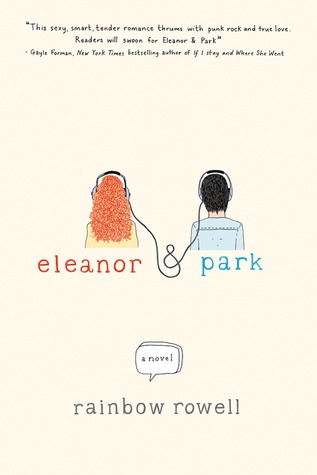
review: eleanor & park

ELEANOR & PARK
Rainbow Rowell
St. Martin's Griffin
I'd heard wonderful things about Eleanor & Park. Heard that it was great and beautiful and painfully good, really. But I tend to regard these books that get rave reviews with a certain amount of suspicion; still, reliable fellow bloggers loved this book so I thought -- hoped -- that I would, too.

It didn't quite turn out that way. Eleanor & Park is well-written, no doubt about it. It's an angsty, awkward story of first love set in the 80s. And it is beautiful, at least in parts. The slow-then-quick falling of Eleanor and Park into love adds to the general feeling of desperate, inevitable angst. But Eleanor & Park is not only a love story; it's also the story of Eleanor's horrible home life. The stepfather who kicked her out once (for a whole year) and who now rules and abuses her family -- her mom, as well as  her four younger siblings. There's a constant sense of fear and danger surrounding Eleanor's life, one that gives the rest of the book an uncomfortable edge. This isn't just, as the front cover claims, a love between misfits; it's also the story of a desperate teenage relationship at odds with emotional and physical abuse.

Though I enjoyed the story between Park and Eleanor, and the dynamic of Park's family (especially when it came to Eleanor), neither of the characters really made that big of an impact on me. I liked them fine, but it was the details of their story that I really enjoyed: the comic books and music they shared, their phone conversations, and how incredibly nice Park was to Eleanor, especially in the beginning when he didn't have to be.

That said, there were some things in this book that didn't sit well with me. The headlong, hasty rush into True Love felt... well, not-quite-true. It felt immature. Like teen love, sure, but not the sort of teen love that would last. Aside from that there was also quite a bit more vulgarity in this book than I was expecting. I was taken aback by the very liberal use of cuss words, especially when neither of the main characters spoke like that themselves. And though I used to think that cussing in books wasn't something that especially bothered me, this book proved me wrong; the too-often-used vulgarity put me off a book that I otherwise would have enjoyed quite a bit more, though I may be in the minority here.

There was a lot to love about this book, not least of all it's solid writing and the natural way the story was allowed to progress. But there was also quite a bit I could have done without, such as the cussing, the immaturity that was supposed to pass for maturity even in the eyes of the adults in the novel, and the fact that I didn't care enough about either of the main characters.

Friday, February 1, 2013

review: out of the easy

OUT OF THE EASY
Ruta Sepetys
Philomel Books
(ARC received at ALA12)
There are some books that are objectively, almost undeniably very good. Ruta Sepetys' first novel, Between Shades of Grey was that kind of book. It was powerful and beautifully-written. But then there are other books that get away from the objective and on a personal level you just love them. For me, that's Sepetys' upcoming second novel, Out of the Easy. Set in 1950s New Orleans, this is a book that's more about a place, time, and atmosphere than it is around a historical event. Josie Moraine is a smart and good-natured girl stuck in a set of bad circumstances. Her mother's a prostitute who sees Josie as a burden (despite the fact that Josie hasn't actually lived with her mother since she was 11 and has instead kept her own apartment above the bookstore she works at); the owner of her bookstore is getting sicker and sicker; and Josie's chances of getting out of New Orleans and attending college are slim to say the least.

Josie herself is an awesome protagonist -- smart, sweet, down-on-her-luck, and entirely believable. Her story is helped by the cast of similarly lifelike characters around her, from the son of the bookstore owner to Willie, the madam who runs the brothel her mom works at. Despite the fact that Josie's ignored by her mother, she does have plenty of others who care about her -- it's just that her dreams and goals for her life don't quite match up with theirs.  Willie would be happy if Josie were her housemaid forever, but Josie longs to live in a place where everyone doesn't think of her as trash. I'm wary to give too much of what happens away so I won't get into the details of the plot, but I will say that this is one of the finest, most interesting historical novels I've read. While Josie's a great character and her journey is plenty interesting, the heft of this book's strength lies in its setting and atmosphere. The seedy of New Orleans is wonderfully realized here -- dusty, desperate, and incredibly well-written. Historical fiction is often difficult for me to really get into, but this one was just great; it hit all the right notes. Out of the Easy hits shelves February 13th, 2013.

Thursday, May 31, 2012

Review: The Summer I Learned To Fly

THE SUMMER I LEARNED TO FLY
Dana Reinhardt
Wendy Lamb Books
Thirteen-year-old Drew Robin Solo is a cautious girl living a careful life in the that consists mostly of helping out at her mother's cheese shop and crushing on Nick, the college-aged pasta-maker who works for her mother. Her friends from school aren't much to brag about and her true friends are her mother, Nick, Aunt Swoozie, and her pet rat (Hum, short for Humbolt Fog). This changes when she meets Emmett Crane, who writes her notes on paper cranes but whose past is  a mystery.

This is a short, meandering, emotionally powerful story that reminds me in many ways of Sara Zarr's Sweethearts or Haley Tanner's Vaclav & Lena; at its core it's about the intense and powerful friendship/budding-romance between a young girl and boy. The writing is simple, but effective and emotionally powerful. Drew's love for those around her -- the crush on Nick, her love for Swoozie and even for her mother, though their relationship is rapidly changing -- is the center of this book. I have a hard time discussing the plot because really, there's not one to speak of. This is a literary sort of book, and none of the events that happen are quite big enough to be considered the primary plot of the book, no matter how important they are.

The characters in this book are realistic and well-defined, with wonderfully realistic relationships between them. The fact that it takes place during the 1980s may be a problem for some readers, though I understand the reasons Reinhardt may have made that choice and it didn't hinder my own reading enjoyment. The Summer I Learned To Fly is the sort of short, creative, straight-to-the-heart novel that I absolutely love and recommend for those who enjoy a more literary, slow-moving writing style that hinges on those tiny turning points that happen during childhood and early adolescence.

Wednesday, November 2, 2011

Review: The Future of Us

THE FUTURE OF US
Jay Asher & Carolyn Mackler
Razorbill
It's 1996 and Emma's friend Josh has just given her an AOL CD-ROM to go with the computer her dad bought her. When she creates an email address, she accidentally stumbles fifteen years into the future -- onto her future self's Facebook page. Once they get past thinking the page is an elaborate practical joke, Emma and Josh realize that they can see their futures -- and what they see isn't what they're expecting. As Emma tries to change the future and Josh tries to hang on to it, each of them must take a step towards what they want now.

I'm just old enough to be totally spazzing out about a book set in the 90s. All the references! The sly future in-jokes! I'm old enough to remember 1996, in a very child-like way (because, um, I was SIX) but honestly I don't think the time period is going to throw off a lot of teen readers the way you might expect. Even if someone doesn't remember the particular reference or year, they'll easily find their footing amidst all the music references and VHS-talk. This book has a cool mix of being slightly old-school and offering up Back-to-the-Future-style shenanigans; this is where it's true appeal lies. The premise is pure AWESOME.

Beyond the premise, I didn't always love the two main characters, Emma and Josh. Emma, who goes a bit crazy with trying to change her future, is a bit prickly. She seems to know exactly who she doesn't want to be, but has no idea who she does want to be and there were many points in the book where I just got irritated with her as I felt like she kept missing the point. She could be a little dense. Josh, on the other hand, is the ultimate Nice Guy. He's got a crush on Emma (or did, at least) and finds it easy to go along with what she and her other friends suggest without making many decisions for himself. If the book had been reliant on the characters alone, it would have been an okay-but-bland read. Luckily, this wasn't the case. Some readers might not love that the future world Emma and Josh discover can be changed by the decisions they make in 1996, but I thought this was a great part of the book and brought into play some incredibly interesting themes having to do with happiness, personal responsibility, and the ripples that seemingly small changes can create in the future. Though I sometimes felt like Emma went too far in her small-changes-big-ripples idea, I liked that this part of time-bending-warping stuff (whatever you call it) was brought up.

There are quite a few subplots in this book - most of which would be spoilers to talk about - and I did find myself wishing the book had dealt with them better in the end. While some were things that really didn't need to be resolved, the ending seemed to come too suddenly and there were loose ends that I wish had been tied up a bit neater.

But The Future of Us isn't about it's subplots, or it's ending, or even Emma and Josh, really. It's about seeing your future and figuring out what to do if you don't like it - or if you do - and it's about remembering the now even as you're focused on what comes next. This is a quick, immensely fun read, and though it feels lighthearted, it will leave you thinking.


The Future of Us comes out Nov. 21st.

Saturday, October 8, 2011

Review: Forge

FORGE
Laurie Halse Anderson
Atheneum
After having earned his freedom fighting in the Revolutionary War, slave-turned-soldier Curzon must enlist in the war once again because despite the freedom he's earned, his lack of papers makes him an escaped slave instead of a freed one. As he deals with the harsh conditions at Valley Forge, he tries not to dwell on Isabel, whose whereabouts are unknown. He focuses on America's fight for freedom even as his own freedom is not yet secure.

Not having read the first in this series, Chains, I started Forge playing catch-up. The book works as a stand-alone, but I suspect it would work a lot better as a sequel. Historical fiction is a hard sell with me and the Revolutionary War period is one that especially tends to bore me for some reason, so it took quite a while for me to find my footing in this book. Though Curzon and the secondary characters (especially Eben, who I loved) is written well the fact that I came into the story partway through was definitely a stumbling block I don't suggest.

This is the first historical book I've read by Laurie Halse Anderson, but I'm happy to report that her historical writing skills are every bit as good as her contemporary writing skills. Though there were points when the story seemed to drag on, I have a feeling that's more my fault than the books and about halfway in I was hooked. The focus on slaves in the war - the fight for the freedom of a country versus the freedom of a people - is an incredibly interesting subject and well-done here as Curzon's opinions on the matter don't always match up with the opinions of those he cares about (Eben and Isabel, for instance). The relationships between the characters, most notably Curzon and his fellow soldiers, is one of the strongest points of the novel. It's easy to get caught up in these characters and their lives. The perspective of an escaped slave also brings a new POV to a part of America's history that often seems boring and rote, especially to those readers (like myself) who have mostly learned about the war from textbooks.

This is the first book to get me interested in the Revolutionary War. With well-crafted characters, an interesting subject matter, and rich historical detail that adds to the story I definitely recommend it to historical fiction fans as well as readers who are a bit more lukewarm about the genre.

Wednesday, July 27, 2011

Review: The Book Thief

THE BOOK THIEF
Markus Zusak
Knopf Books for Young Readers
Narrated by Death, The Book Thief is the story of Liesel Meminger, a young girl living with foster parents in Nazi Germany. Liesel, who watches her younger brother die on a train at the start of the novel, steals books (hence the title) and has an affinity for words, prompted in part by her loving foster father who teaches her to read late at night. The book takes place during the Holocaust however since the focus is on a German girl living in a small town, it has a decidedly different feel than most Holocaust fiction I've read.

To be honest, this is one book I almost didn't finish. At the fifty page mark I was still pretty uninterested and was finding the narration of Death a bit confusing. Luckily a Twitter friend told me to stick it out, and I'm glad I did as it quickly became apparent that Death is the most appropriate narrator for this story that takes place during World War 2. The third-person, sort-of-omniscient point of view allows for a wider story than we'd otherwise get. Leisel's foster father is one of the few men who doesn't belong to the Nazi Party and because of this he finds it difficult to get work as a painter, making their family one of the poorest in an already-poor neighborhood. The war and the realities of the Nazi regime hit close to home when Liesel and her foster family hide a Jewish man in their basement. This divides Leisel's life into two distinct parts: the part she plays outside of the home as she attends Hitler Youth, plays soccer with the neighborhood friends, and occasionally steals books from the mayor's house, and the life she has at home as she makes friends with the Jew and reads her stolen books to him.

For me the story arc involving the hidden Jew was the real heart of this book and as the story widened to include Liesel's friends and neighbors, their various histories, and the war itself it became obvious why Death was an actual character in this book and why it was chosen to be the narrator. For even at the happiest, brightest moments in Liesel's life there's a sense of dread as the reader knows -- even if the characters don't -- that there are many unseen horrors happening and that they will, as we are repeatedly told, eventually come to Munich Street. There's a legitimate sense of dread and foreboding in this incredibly powerful book. 

And it is both powerful and beautiful as a story not only of the Holocaust, but of the extraordinary feats -- both terrible and amazingly good -- that humans are capable of. Liesel, her foster parents (especially her father), and her best friend Rudy are the primary characters whose capacity for goodness is extraordinary, and I feel odd voicing the problems with this book because it is, for the most part, one of the best books I've read on this period of history.

However, things started to fall apart for me about 400 pages into this 550 page tome. Whereas previously there had been a great focus on story and characters, which conveyed the ideas and -- dare I say it? -- morals of the story very well, the narration started to seem overly verbose, almost wandering into "purple prose" territory. We are told, instead of shown, the power that words have. There's a romanticism of words, the narrator's own words in particular, that doesn't quite fit the rest of the book and had me feeling as if the book were going on much longer than it should have. The story, as its narrater drifted into the future and continually reminded us what was going to happen, seemed to drift away and I kept waiting for the narration and story to meet up again. This did happen, but not until the very end of the book -- at which point, despite all the spoilers Death had given us, I still cried.

This book is incredibly powerful. For the most part it's amazing. However, there's a romanticism and idealization of words within it that doesn't sit well with me considering the subject matter. I felt that it was almost too beautiful and too concerned with its own beauty considering all of the horrific stories it contained.

Friday, April 29, 2011

In Which I Confess Some Issues...

I like historical fiction the same way I like coffee: in theory. As an idea, both are fantastic. Coffee brings to mind keys clacking on a keyboard, books being written, people coming together and having conversations. However, it tastes like bitter. Historical fiction brings to mind history only interesting and full of people whose lives I actually want to know about. In reality, however, I frequently end up lagging through the book, either giving up or having to force myself to keep reading.

The problem is not that these books aren't good. Oftentimes they're written incredibly well, with interesting characters. The problem is the fact that I get bored easily. The plots of historical fiction are often slow-moving, with language that makes for a slower read than I generally like. It's sometimes a struggle for me to stay interested in a novel that takes me a week or longer to get through.

With most books (contemporary, memoirs, science fiction, dystopian, etc...) it takes anywhere from one to forty pages for the story to grab me. With historical it's not unusual for me to keep pushing through the 100 page mark and still -- despite me knowing it's a good book with great characters and plot and I should be interested by now! -- not really be into the story.

THIS IS A PROBLEM.

So, all of you fans of historical fiction -- enlighten me, please. What is the draw? And even more than that can you please recommend some great books for me? Also: what genre do you have problems with, despite really wanting to like it?

Wednesday, April 13, 2011

Review - In the Shadow of the Lamp

IN THE SHADOW OF THE LAMP
Susanne Dunlap
Bloomsbury USA Children's Books
After being fired from her job as a parlormaid, young Molly Fraser stows away aboard the ship carrying Florence Nightingale and her nurses to Crimea. The work is horrifying and the hours are long, but Molly is determined to make her family (especially her mother) proud. She finds herself falling for a young doctor in spite of the strict rules Mrs. Nightingale has against her nurses socializing with the men. But the doctor isn't the only one she has feelings for -- there's also a boy from home who's joined the war in order to be closer to her.

I'm a bit torn over this book. On the one hand, I did like it and it was an interesting look into the character and legacy of Florence Nightingale. However, on the other hand there were parts of Molly's story that didn't seem to fit or ring true to the character.

Molly is a strong-willed character who manages to not only stowaway aboard the ship carrying Mrs. Nightingale's nurses, but also convince Nightingale to let her stay on as a nurse despite being much younger than the others (as well as untrained). Molly is determined to make her mother proud and pay back the money she borrowed to make the journey. I loved this version of Molly; she was smart, talented, and determined to make something of herself in spite of being turned out into the street after being betrayed by someone she thought was her friend.

However, as the story goes on a couple of different romantic storylines develop. In spite of the strict rules against socializing with the men, a romance grows between Molly and one of the doctors. At the same time, she finds herself contemplating marriage to a soldier she's known for quite a while. For me, this derailment into a romance-focused story really took away from the story of Molly becoming a nurse as well as changing her from a character who cares about following the rules and learning from Mrs. Nightingale, to breaking the rules and sneaking away. If it had seemed like she really had strong feelings for either of these men, maybe the effect would have been different, but that's not how it came across.

This book has a wonderful historical setting and backstory, as well as shedding light on Florence Nightingale and the early beginning of modern nursing practices, but the romance aspect got in the way of the rest of the story for me. However, I'm not generally a big fan of historical fiction, so this book may be better for those who do enjoy the genre.

Tuesday, April 5, 2011

Review - The Time-Traveling Fashionista

THE TIME-TRAVELING FASHIONIST
Bianca Turetsky
Poppy
To the chagrin of her mom and best friend, 12 year old Louise would rather wear "old" vintage clothes than shop at the mall. When she attends a vintage clothing sale hosted by two eccentric women, she finds a beautiful dress that she thinks will be perfect for an upcoming school dance. She tries it on, against the advice of the sellers, and is instantly transported to the early 20th century. In the body of a famous actress and on board a dazzling cruise ship, Louise is determined to enjoy being someone else for a while until she finds out that the ship she's on board is the Titanic and she has to find a way to get back to her real life before the shipwreck.

Louise is a likable main character and her story is an enjoyable one. The history theme is interesting, especially as Louise's interest in the history of the Titanic grows, though I'm not sure how accurate many of the scenes set aboard the ship are in terms of societal norms and dialogue. Louise's growing relationships on board the ship, especially with her maid, are interesting and fun to read about but because Louise is from 2011 and the other characters are stuck permanently in 1912, there is a necessary distance between them that will probably keep readers from getting too emotionally invested in anyone other than Louise. One of the most fun parts of the book was seeing Louise's thoughts while on board the Titanic -- she was humorous and somewhat believable in her reactions to finding herself trapped in the past.

Fashion and the history of fashion really is a huge part of this book and while I'm overwhelmingly fashion illiterate (that's a thing, right?), the story is great for girls who love vintage clothing and are interested in its history. There are quotes from iconic designers, descriptions of clothing that goes deeper than merely stating the brand, and pictures that in the final edition will be full color.

Though from everything I've read this book is being marketed as YA, the writing style and the 12 year old protagonist both seem a bit young and personally I think the book will appeal much more to pre-teens and younger teen girls than it will older teens.

*Recieved ARC at ALA.

Wednesday, March 30, 2011

A Few Small Reviews

There are a few books I've read recently that, for one reason or another, I'm not going to be writing full reviews of. I did want to share them with you guys though, so I'll be doing a couple of mini-review posts to give some idea of what these books are about and who might be the right readers for them.

THE KID TABLE
Andrea Seigel
Bloomsbury USA Children's Books
After Ingrid's cousin manages to convince her extended family that she's a budding psychopath, Ingrid Bell has to find a way to not only convince them that she actually has emotions but also figure out what to do about her growing attraction to one cousin's boyfriend while helping another cousin with the problems in her life. Though Ingrid may have been a somewhat unreliable narrator (it's really hard to tell), I really enjoyed this book. The extended family aspect, especially the closeness between Ingrid and her five cousins, really appealed to me and I loved the format of the book as it's written around five big family events. This is Andrea Seigel's first young adult novel and I recommend it especially to those readers who like offbeat protagonists and family-centered stories.

WHERE I BELONG
Gwendolyn Heasley
HarperTeen
When the recession hits Corrinne's rich New York City family in a big way, she's pulled out of her exclusive private school and sent to live with her grandparents in rural Texas. This is your classic fish-out-of-water tale featuring a character who is, at least at first, ridiculously spoiled, superficial, and selfish. However, Corrinne grows up a lot through out the story; she develops a healthy attitude and a new perspective. In short, she's a character worth rooting for. The story itself is told with humor and I really like that the book reflects the current economic climate of the United States as this is something I haven't seen in many books before. It's a great lighthearted read for those looking for a fast and fun story.

EXPOSED
Kimberly Marcus
Random House Books for Young Readers
After a horrible fight one night, Liz Grayson's forever-best friend will barely look at her and Liz isn't sure how to fix things. When it comes out that something much worse may have happened to her friend, Liz's loyalty to both her family and her friend is tested. The protagonist here is a photographer and the verse style of the writing reflects moments captured as if in a snapshot. I'm a fan of novels written in verse, but I was looking for a bit more details to this story. However, in spite of that this is an emotional book that I recommend to readers interested in a book that deals with family loyalty and issues of trust and friendship. I'm deliberately leaving out a huge plot point so as not to spoil anything but this book definitely deals with a heavy issue.

TAKING OFF
Jenny Moss
Walker Books for Young Readers
Set against the backdrop of the 1986 Challenger explosion, this book tells the story of a girl struggling to find her own way in life. When she meets Christa McAullife, the schoolteacher going into space, Annie is inspired to find a way to go after her own dreams. This is a beautifully-written book that was so different from what I expected; Annie is a wonderful and inspiring main character and her journey is both universal and personal. This book is especially great for readers interested in the Challenger space shuttle and that period in time, but really I recommend it for anyone who might want to read a book about someone finding their way in life.

Saturday, March 26, 2011

Review/Giveaway - Between Shades of Gray

BETWEEN SHADES OF GRAY
Ruta Sepetys
Philomel Books (An Imprint of Penguin, USA)
In 1941, when Josef Stalin wiped Lithuania off the map, 15-year-old Lina's family is taken from their home. Separated from their father, Lina, her brother Jonas, and their mother are sent to work camps in Siberia. Under incredibly harsh conditions, the Lithuanians must fight for their survival against the uncaring and callous NKVD (later known as the KGB).

Before reading this I had heard from others how powerful the story is, and they were right. Lina is an incredibly kind, caring, compassionate, and artistic character. She's also stubborn and struggles to hide her hatred of the NKVD in order to keep her and those with her safe. Lina is an artist and her drawings are a constant part of the narrative as she draws both what she sees and how she sees it, which means that if her drawings are found she could be killed. Instead she hides these drawings between book pages and in letters that she tries to get to her father. It's in part because of Lina's artistic and kind nature that the narrative is as beautiful as it is. These are characters that, despite undergoing incredible hardships, are still able to find hope and hold onto it. Lina's mother especially is one that is constantly hopeful and giving to others.

There is a strength of spirit here that is undeniable. These characters -- and this story -- are a triumph of the human spirit. It's a tale of not only physical, but also mental and emotional survival.

That said, the events of this book are gruesome and difficult to read. Inspired by the artist Munch, Lina's drawings are often grotesque or disturbing because they reflect her surroundings and the things she's going through. After being taken from their home, her family is forced to work on a beet farm in Siberia. They are given a very small ration of bread each day as "payment" for their work and when someone gets sick and is unable to work they aren't given rations. Lina watches as the people she lives with get sick and die. She watches a young woman who has lost her infant be shot in the head right in front of her. She sees her younger brother become incredibly sick with scurvy. The mother of Andrius, a boy she has feelings for, is forced to prostitute herself to the NKVD officers in order to save the life of her son. These are a short list of the atrocities Lina and her fellow Lithuanians face in exile and they are all portrayed in a starkly honest way. This is, as others have said, a very powerful book. It's beautiful and sad and all the more important because of how incredibly real it is. Through the characters are fictional, the events and many of the experiences are real -- things that actually happened to Lithuanians who were exiled and that the author, Ruta Sepetys, found out about through her extensive research.

While I typically keep the books that I really enjoy, this is one that deserves to be passed on and shared, so I'm giving my ARC away to one lucky reader. 
Due to shipping costs, US addresses only please. This giveaway will run until April 2nd.

Tuesday, March 15, 2011

Review - Strings Attached

STRINGS ATTACHED
Judy Blundell Scholastic Press
The year is 1950 and after moving to New York City to pursue her dream of acting, Kit Corrigan quickly realizes that - despite her talent and determination - she's going to need some help in order to be able to stay in the city. This help comes in the form of Nate Benedict, the father of her (ex?)-boyfriend Billy... and a big-time lawyer with mob affiliations. He offers her a nice apartment, new clothes, and a foot in the door at the famous Lido club -- no strings attached, or so he says. The reality, Kit finds out, is that he expects her to be at his beck-and-call: to keep in tough with his estranged son (Billy) for him as well as hold packages for strangers and keep tabs on tough-looking guys that hang out at the Lido. Between the debt she owes Nate and her confusing feelings for Billy as well as family drama going on at home (her aunt has disappeared and her brother has enlisted in the military), Kit's life is a balancing act and it doesn't help that Nate's possible mob involvement is growing more and more sinister.

Strings Attached takes on a lot. Along with the mystery that lies at the center of the novel there's also Kit's complex love life, the unknown story of where her aunt disappeared to, dreams of stage fame, and a few other subplots that are woven together. What this means is that though the book gives a well-rounded view of Kit's life both before and during her move to New York City, it doesn't answer all the questions it raises. Either because of the time period or because of the Corrigan family's habit of brushing big topics under the rug, there are shades of ambiguity in many of the storylines here, including the relationship Kit shares with Billy and the issue of her brother's sexuality. While this ambiguity makes sense for the time period and will undoubtedly work for some readers, I was left wanting just a little bit more answer along with all the questions.

Kit herself is a character I have conflicting feelings about, which is a testament to how three-dimensional she is. Only seventeen years old, Kit is (by choice) already out on her own in "the big city." She's accustomed to dealing with lewd comments from men, knows how to carry herself with confidence and stand up for herself; in many aspects she seems incredibly grown up and mature. Then there are other moments, just as vivid, where she seems to morph back into an actual 17-year-old, laughing with the boy next door and stealing a few carefree moments. I really like this dichotomy and how it's presented.

As I mentioned earlier, this book has more storylines than it manages to tie up and that's where my real problem lies: there were a few plots I was incredibly interested in that seemed, just because of how full this book is, to never be fully explored. Kit and Billy's relationship is one that I feel like I could have read an entire novel about -- and if it had been the focal point of this novel I would have really liked it. Unfortunately, there's just too much here for me. That said, I do think that fans of multi-layered novels and quiet mysteries will enjoy this one.

Thursday, March 10, 2011

Review - Purple Daze

PURPLE DAZE
Sherry Shahan
Perseus Books
Purple Daze, set in the LA of 1965, follows a loosely-knit group of six teenage friends during this time. Written primarily in verse, the book is a combination of their letters, poems, and journal entries interspersed with news headlines and articles from that time period.
As someone who pretty much just thought the cover was awesome-looking, I was thrilled to discover that the story is told in verse. Though I'm a huge fan of novels written in this way, I really think that some stories work better in this format than others and I wasn't sure where this story would fall. Happily, this look at the political and social scene of 1965 works surprisingly well told in verse. I can't explain it any better than to say that, with this book, the style just fits. 

Another thing that works really well here is the split-narrative. Through the eyes of six different teenagers we get a bigger story than we'd get if the book were only from one character's point of view. Unfortunately, there are pitfalls to having so many narrators and with this book one of the pitfalls is that it was hard to tell how the characters were related. Though some were obviously dating and others were best friends, I found myself having to best-guess at the relationships between some other characters (Cheryl and Phil, for instance). Additionally, though I know some people will love this aspect of the book, for me the scattered news excerpts pulled me out of the story.

One of the things this book does best, to its credit, is defining the setting. The time and place of these characters rings out loud and clear, easily pulling even someone who knows very little about this part of history (ie. me) into the story and the narratives. The further into this book I got, the more I cared about the characters and their relationships and individual stories. I found myself cheering for them, hoping for things to turn out a certain way. This is one of those "quiet" books that I fear won't get the attention it should. The writing is honest and at times beautiful, the characters are well-written, and the setting is great. Despite being set in a very turbulent time, the book itself is action-light and character-heavy, which I love and I think through this it manages to paint an incredible picture of the time period.

I especially recommend this book to anyone interested in knowing more about the social and political climate of America in the 1960s, readers who enjoy split narratives, or who want to read a book in verse.
Purple Daze is set to be released March 22, 2011.

Saturday, January 22, 2011

Review - Other Words for Love

OTHER WORDS FOR LOVE
Lorraine Zago Rosenthal
Though this book's summary makes it sound like a story of love and heartbreak, it's really more complicated than that. Set in the late 1980s, Other Words for Love is a coming-of-age story in the truest sense of the word and it follows Ariadne, a teenage girl who seems to be an observer in her own life. Intimidated by her beautiful, brilliant, and bold best friend and overshadowed by her married older sister who suffers from post-partum depression, Ari tries to be the best daughter she can for her mother, who expects her to make up for her older sister's mistake of getting pregnant and married as a teenager. Feeling guilty about her jealousies and the lustful crush she has on her sister's husband, Ari continually tries to uphold other's expectations of her, often at her own expense, a habit she only breaks (and then only somewhat) when she meets the Ellis family and falls for Blake, a guy who seems as trapped in his family as she is in hers.

This book surprised me in a lot of ways and I'm still not entirely sure how I feel about it. There was much more sexual content than I was expecting and a lot of it felt unnecessary, especially as the romantic relationship didn't seem to be the primary focus of the novel. Additionally, having the story set in the 80s gives the whole novel a distant, almost blurry effect, as if it were a Polaroid snapshot. The feeling of distance works well in this slow-paced book but the time period is strange as there doesn't seem to be a lot of historical significance to anchor the reader and it's relatively recent, though not recent enough to be remembered by many YA readers. As a general rule I think that in order for a story to be told in a nontraditional way or set in a nontraditional place or time there should be a specific reason for it; the decision should be demanded by the story. In this case I didn't see that and felt that the story could have been told just as well and possibly better if it were set in the present day.

However, in spite of this distance there's a certain enchantment to Ari's story and Ari herself. She's a well-written, multi-dimensional protagonist that, though quiet and unassuming, completely pulls the reader in because she's just that real. The people in her world (her family and few friends) are also well-developed and realistic, from her overbearing mother to her hot-and-cold older sister, and the things Ari goes through at the hands of those she loves are both heart-wrenching and completely believable. Ari is in an odd place in her family of being taken for granted while at the same time expected to exceed and fulfill her mother's aspirations of her. Likewise in her friendships she's also in a precarious place as her best friend (who for a long time has been her only friend) has no trouble ditching her when other, more interesting people come around but expects Ari to always be around for her and gets jealous when she begins to develop other friendships. The paradoxes of Ari's situations are, to me, incredibly interesting and realistic, which gives weight to the story.

Honestly, at times this book feels tedious, especially when it comes to Ari and Blake's ill-fated relationship. Though the writing is good and had its moments of beauty, it isn't enough to carry through some of the more boring scenes and since the book is so slow-paced I sometimes found myself wishing there were more action. But then I got to the end. And though there was some boring bits in between, the ending of this book really pulls the whole thing together, tying the story up nicely and in the best possible way as some of the storylines that didn't even seem important are pulled to the forefront, making the entire novel better and ending it in both an incredibly realistic and hopeful way for this character who definitely deserves happiness. The slow pace and lack of excitement may put off some readers, but stick with it and you might find a story to love.

Sunday, December 26, 2010

Review: Bright Young Things

BRIGHT YOUNG THINGS
Anna Godberson
Bright Young Things follows the story of three young girls living in New York City during 1929 -- the Jazz Age. The story opens with Cordelia Grey and Letty Larkspur - two small-town Ohio girls - catching a train to New York City. While Letty hopes to become an actress or singer, Cordelia hopes to find the father she never knew. Once in the city, the girls' paths diverge as Letty winds up working in a speakeasy and Cordelia manages to find her rich, bootlegging father. She also meets the third focus of the book, Astrid Donal, a young socialite in love with Cordelia's half-brother.

As excited as I was about this book, I wasn't quite sure what to expect. I loved Anna Godberson's previous Luxe series so much and because the two are so similar it's difficult to read Bright Young Things without comparing the two. The setting here is incredible, capturing the glamour, ritz, and precarious balance of the time. It's absolutely beautiful and throughout the story there's this feeling of this can't last, as if I was just waiting for other other shoe to drop because I knew the perfection of these character's lives would have to end sooner or later. And this, as it turns out, is sort of the problem with the book; everything seems too perfect and for much of the novel it remains that way. There's a lot of set-up and backstory here and while it gives the book a laid-back, glitzy feeling, it also means that the book eventually starts to drag.

Each of the characters is different and unique, from starry-eyed Letty to tough-as-nails Astrid. However, in spite of that I felt a lack of connection with them for the most part. For the most part I didn't feel myself emotionally invested in Astrid or Letty's stories and while I loved Cordelia I found it difficult to swallow a few of the decisions she made, especially after traveling so far to find her father (if you've read the book you may know what I'm thinking of here). The relationships in this book were also a bit less than what I was hoping for. Though each girl had a love interest throughout the story I found it difficult to really root for any of the pairings and the book's focus on them really slowed it down for me.

To call the voice of this novel flawless might be a stretch, but not much of one. Godberson has a true gift for writing passages that manage to be sad, beautiful, and hopeful at the same time and there are certain lines here that I thought were absolutely perfect. Overall, this is a glitzy, glamorous, and slow-moving novel that, as great as it is, really does feel like the first in a series, which is a something of a drawback. There's a lack of connection to the characters and relationships, however there's also a huge sense of possibility and what-will-happen-next here that really raises the book up.

*this review is part of the Teen {Book} Scene Tours

Friday, December 17, 2010

The Saddest Ending of All Times & Ever

A while back Adele, from Persnickety Snark did a post on the marriage of Jo and the professor (surely he had a name, right?) in Little Women. In it, she asked us what elements or events in a certain book are things that we just can't move past. When I first read her post I thought that, for me at least, there wasn't really anything I could think of. Generally, even if I don't agree with how certain characters end up or how a storyline goes in a book, I trust that the author knows what he or she is doing. After all: it's not my story; it's the author's.

And then, when Anna Godberson's new novel Bright Young Things arrived in my mailbox, I remembered. That one book, that one thing that I just can't get over. And I wish the book I cared that much about was a classic like Little Women, but it's not. It's the last book of Godberson's Luxe series -- Splendor.


Let me backtrack.

A couple of years ago I bought the novel Luxe. I don't remember why exactly, because I'm not usually a fan of Gossip-Girl type books or historical, but the cover was so beautiful and it was in paperback at Wal-Mart and I wanted something to read. And to say that I loved it would be an understatement. Luxe completely pulled me into its chaotic, glamorous, gossipy pre-20th-century world. I went out and bought the second book in the series (Rumors) the day after finishing the first book. Incredibly, I loved the second book even more. The characters! The intrigue! The twists and turns! In all honesty, the Luxe series just got better and better...

...and then I got to the fourth and last book, Splendor. And not to spoil anything for those of you who might read it, but do you know what the last couple of chapters did to me? They destroyed me, that's what. Characters I had held my breath for and cheered on since the beginning got endings that I was wholly unprepared for. What went down as one of my favorite YA couples of all time didn't end up together. Can I help it if, in my mind, I still imagine that they wound up together? Even if the ending doesn't support this theory at all? Because that ending? Let's just say IT WAS NOT SMILES TIMES IN THE LAND OF JORDYN. There was much anger. And sadness. And omg I cannot get over it. (Yes, I read the author's explanation of the ending. It did not help how sad it made me and how not-right it seemed.)

Now. Let us think of happier things, shall we? Whoever can tell me where the reference "we are not smiles times" comes from IS THE WINNER. (Of what? Of WINNING, der. Bragging rights.)