I recently read the last two books in the Threads trilogy/series, by Sophia Bennett, but unfortunately I read them too close together to write up individual reviews. (Also, sadly, only the first -- Sequins, Secrets, and Silver Linings, is out in the US -- the others are UK books.) So instead I'm going to tell you, once again, that these books are amazing. They're funny. They're sweet. The characters are wonderful. They fall easily into the category of "so cute," but surpass that category by leaps and bounds. The series mixes things like art, acting, and fashion with some very real issues like forced child labor (just for an example).
Nonie is a funny, frantic, totally winning narrator who reminds me of a slightly more frantic Anna Oliphant (yes, from Anna and the French Kiss). Her friends Edie, Jenny, and Crow are unique and brilliant in their own ways. Her older brother Harry is in the same category as Spencer Martin as far as wonderful-big-brothers-in-YA go. And all of the characters are crazy-talented. Yes, it's unrealistic, but it also gives another dimension to their very real personalities and mundane school-type things. It means they have to make some difficult choices while at the same time allowing for totally fun, fast-paced stories.
I love this series. It's so well-written, so beyond cute, so incredibly brilliant.
Showing posts with label series. Show all posts
Showing posts with label series. Show all posts
Saturday, September 29, 2012


Tuesday, September 25, 2012
tuesday 10: unfinished series
This week's topic from The Broke and the Bookish is series we haven't finished (for whatever reason), and this is probably going to be a more negative than usual post because the vast majority of series I don't finish get dropped because I don't like them.


1. Delirium
Lauren Oliver
As amazing of a writer as Lauren Oliver is (Before I Fall is one of my all-time top books), I could never fully buy into the society presented here and the characters and story didn't capture me. I read Delirium and I liked it okay, but not enough to read its sequel, Pandemonium, or the final book (which I don't think is out yet, but I could be wrong).
2. The Chemical Garden series
Lauren DeStefano
So I read Wither and, to be honest, I was pretty impressed. It was seriously, seriously good. But by the time Fever came out my intense want to see what happens next had waned quite a bit (this is sometimes a problem with series) and a few negative reviews by those I trust put it way down on the list for me. And I still haven't gotten around to it, though I'm not saying I won't.
3. Divergent
Veronica Roth
I heard such, such great things about this book when it came out. But it just wasn't my thing. I found it too violent (and whereas the violence in The Hunger Games series felt warranted and there for the specific purpose of showing how horrible it is, here it just seemed, to me, gratuitous) and never connected with the characters, especially the main character of Tris.
4. Deadly Cool
Gemma Halliday
I read the first book of this series (Deadly Cool) for the Cybils last year and while there was nothing especially wrong with it, it's a sort of episodic series, which works great for me in television but quickly loses my interest in novels.
5. Seeds of America series
Laurie Halse Anderson
This is an odd one. Forge is another book I read for the Cybils and it's actually the second in the Seeds of America series. I really liked the book (although I did feel a little lost with it being the second) and there's really no reason I haven't read the rest of the series. If I ever make myself finish all the half-started series that I've liked, this one will totally be on the list.
6. Sky Chasers series
Amy Kathleen Ryan
Alright, this is maybe even odder than the last one. I read Glow as a coverless galley and was, kid you not, completely entranced in the story, the world, everything. There were some parts that didn't sit well with me, but the book was nearly impossible to put down and it wasn't until after I'd finished and was thinking about the book that I realized how much I really didn't care for it. It was unputdownable, but in the end the way faith, love, and the characters themselves were portrayed really bothered me. And the more I thought about it, the more it bothered me. So needless to say I haven't read the sequel.
7. Bright Young Things
Anna Godberson
I absolutely adored Godberson's first Gossip-Girl-esque historical fiction series, Luxe, and was hoping to replicate that feeling with this series set in the 1920s. I'm not quite sure what happened. I know Bright Young Things wasn't as great (for me) as The Luxe was, but I definitely liked the book. Most likely what happened was I got distracted by other books and by the time the second in the series came out I'd all but forgotten about it. (Like I said, a hazard of series.)
8. The Giver
Lois Lowry
Um. Honestly did not realize this book was the first in a four-book series until the annual ALA this year. I've only read this one.
Oh wow, look! I could only come up with eight series. Claps all around. Honestly, I'm pretty good at finishing the series I want to finish. Or maybe it's just that I have less series to read because of how many I give up on. I don't know.
Thursday, July 12, 2012
Problems I Have With Series
In my last All The Books post I mentioned that planned trilogies and series make me nervous and I thought I'd explain that a little bit, with some reasons to be wary of planned series.
reason #1: (the obvious) YOU HAVE TO READ ALL OF THEM TO GET THE FULL STORY-- I feel like this needs no explanation. Every book lover knows this feeling of not quite knowing if they want to commit to a multiple-book story arc. And with this trilogies are one thing; three books isn't so bad. But it's the series that are planned as five or six books, or the ones where you don't know how many books there'll be, that give me the most pause before reading book one. Examples include: all the series.
reason #2: IT MIGHT NEVER END-- Sometimes, if a series does exceptionally well, it gets a bit bigger. And then a bit bigger again. And the original trilogy is actually five books and there's also a couple of spin-off series. I've mostly stayed away from these (and with the books I read, I'm much more worried about #3 below...) Examples include: Gossip Girl, The Baby-Sitters Club.
reason #3: IT MIGHT END TOO SOON-- This is a particular peeve of mine because it's happened to a few series that I absolutely loved. The books don't do as well as hoped, they fade into obscurity before the series is even finished, and then the series is cancelled. And the reader (in this case me) is sad because they (I) never know what happens! How does it end? This is infuriating, especially if the last published book ends on a cliffhanger (as is so often the case). Examples include: The Mockingbirds, The Naughty List, Bradford Novels.
reason #4: EVERYTHING FALLS APART-- You know what I mean. Things are going fine and great and omg this is the best series evarrrrr!!! but then suddenly, with a change of character or a convenient plot twist or a whatever, things are just the worst ever. Too often this happens in the last book of a series so there's no on-page redemption, which is sad. Examples include: The Luxe, Twilight.
Worry about these four things happening is what makes me so wary of starting in on a series -- and also what makes me crazy nervous for the series that I already love (there's still time for something to go wrong!). What say you, readers? Do you have the same series/trilogy issues that I do?
reason #1: (the obvious) YOU HAVE TO READ ALL OF THEM TO GET THE FULL STORY-- I feel like this needs no explanation. Every book lover knows this feeling of not quite knowing if they want to commit to a multiple-book story arc. And with this trilogies are one thing; three books isn't so bad. But it's the series that are planned as five or six books, or the ones where you don't know how many books there'll be, that give me the most pause before reading book one. Examples include: all the series.
reason #2: IT MIGHT NEVER END-- Sometimes, if a series does exceptionally well, it gets a bit bigger. And then a bit bigger again. And the original trilogy is actually five books and there's also a couple of spin-off series. I've mostly stayed away from these (and with the books I read, I'm much more worried about #3 below...) Examples include: Gossip Girl, The Baby-Sitters Club.
reason #3: IT MIGHT END TOO SOON-- This is a particular peeve of mine because it's happened to a few series that I absolutely loved. The books don't do as well as hoped, they fade into obscurity before the series is even finished, and then the series is cancelled. And the reader (in this case me) is sad because they (I) never know what happens! How does it end? This is infuriating, especially if the last published book ends on a cliffhanger (as is so often the case). Examples include: The Mockingbirds, The Naughty List, Bradford Novels.
reason #4: EVERYTHING FALLS APART-- You know what I mean. Things are going fine and great and omg this is the best series evarrrrr!!! but then suddenly, with a change of character or a convenient plot twist or a whatever, things are just the worst ever. Too often this happens in the last book of a series so there's no on-page redemption, which is sad. Examples include: The Luxe, Twilight.
Worry about these four things happening is what makes me so wary of starting in on a series -- and also what makes me crazy nervous for the series that I already love (there's still time for something to go wrong!). What say you, readers? Do you have the same series/trilogy issues that I do?
Friday, May 4, 2012
Review: The Rivals
 |
| THE RIVALS Daisy Whitney Little, Brown Books for Young Readers |
I was wary of (but excited about) a Mockingbirds (review) sequel, and, it turns out, with good reason. The case this time isn't nearly as cut-and-dried as Alex's date rape case was -- without a clear person (or group of people, even) who are accused, much of the book is taken up by the clue-gathering on the part of the Mockingbirds board (Alex, her boyfriend Martin, and third board member Parker) before there's even an accused to bring to trial. The specifics of the drug/cheating ring are often as confusing to the reader as they are to Alex and there are plenty of misdirects when it comes to who's masterminding the ring. Whereas The Mockingbirds was focused on the date rape issue, The Rivals deals more squarely with the Mockingbirds' brand of vigilante justice and just how well it works (or doesn't). Alex struggles with where the line is when it comes to justice, morality, and who should come first: her friends, or the Mockingbirds. It's clear that this second installment is leading up to the next book and various changes in how the Mockingbirds is run, but maybe because of this it falls prey to that "second book syndrome" in that much of the book feels like a set up for what comes next. Over halfway through the story I still felt like I was waiting for it to begin. (Part of this, maybe, is because the book's title doesn't make sense until nearly the very end.)
None of this is to say that there's not some captivating, important stuff in The Rivals, because there definitely is. Just how oblivious or ignorant the faculty and administration are is brought to the forefront in stunning ways; there were scenes between Alex and the dean of Themis that had me staring in shock at how certain things were viewed and treated. Alex, Martin, and her friend Jones' thoughts on justice, right and wrong, and how the case should be handled were very interesting, especially after reading The Mockingbirds where Alex was on the other side of the fence, so to speak. Having her pushed into a leadership position gives a very "insider" look at how the Mockingbirds operates and what those inside think of it, which was pretty awesome. Unfortunately, the main storyline (the drugs/cheating ring) had so many misdirects and took so long to find its footing that it didn't quite have the heft I felt that it needed to carry the rest of the book. Additionally, second-book syndrome and the fact that I found myself disagreeing with various characters' decisions mean that this one falls a bit short of it's predecessor. This was a good read, and I'm fairly sure (though not positive) that I'll be reading the next book in the series, but The Mockingbirds can certainly stand alone, and maybe it should.
Saturday, March 10, 2012
Sisterhood Everlasting and Series Thoughts
Reading Sisterhood Everlasting, the "fifth" book in the series that begun with The Sisterhood of the Traveling Pants, was a bit of a surreal, strange experience for me. Like many YA readers in their 20s, I read the Traveling Pants series as a teenager and was deeply, deeply invested in the lives of Lena, Tibby, Carmen, and Bridget. They were and are such well-written characters, so complex and intricately developed, that it was almost impossible to not be swept away in their lives and struggles.
I loved that series. Loved it. There was no way for me to not read the fifth book, the grown-up book, the one that can exist as a stand-alone if you haven't read the other four. But reading it there was something wrong. These girls had gone through so much, and now they were going through even more. And it was, to a certain extent, more of the same. The issues and struggles the girls went through were similar to, if not the same as, ones they'd battled in the series.
It made me think that as much as I love these characters and as interested as I was to know where they ended up, maybe it's okay to leave them in the past. Because another book means more troubles, more drama, and to a certain extent it has to be contrived, doesn't it? In order to keep the same style/voice/mood/whatever of the series? With this series, I felt like it sort of did.
And I thought of what Gayle Forman has said in response to reader requests for a third Mia and Adam book. It's brilliant and right on the nose. I really encourage you to read this post, by Gayle Forman (especially the fifth, sixth, and seventh questions) because it says so much about stories and series that's really smart. She's talking specifically about If I Stay and Where She Went, but I think it applies so well to many contemporary series and stories.
I loved that series. Loved it. There was no way for me to not read the fifth book, the grown-up book, the one that can exist as a stand-alone if you haven't read the other four. But reading it there was something wrong. These girls had gone through so much, and now they were going through even more. And it was, to a certain extent, more of the same. The issues and struggles the girls went through were similar to, if not the same as, ones they'd battled in the series.
It made me think that as much as I love these characters and as interested as I was to know where they ended up, maybe it's okay to leave them in the past. Because another book means more troubles, more drama, and to a certain extent it has to be contrived, doesn't it? In order to keep the same style/voice/mood/whatever of the series? With this series, I felt like it sort of did.
And I thought of what Gayle Forman has said in response to reader requests for a third Mia and Adam book. It's brilliant and right on the nose. I really encourage you to read this post, by Gayle Forman (especially the fifth, sixth, and seventh questions) because it says so much about stories and series that's really smart. She's talking specifically about If I Stay and Where She Went, but I think it applies so well to many contemporary series and stories.
Monday, February 20, 2012
Review: Cinder
 |
| CINDER Marissa Meyer Feiwel and Friends |
Full disclosure: I've never liked the Cinderella story. Even as a kid I thought it was pretty stupid that Cinderella did absolutely nothing for herself and was basically handed her happily-ever-after thanks to a fairy godmother. Thankfully, this isn't the case here. Though a retelling of the more traditional Cinderella tale, Cinder uses the elements of the story very creatively and, best of all, gives Cinder actual backbone. She's smart and resourceful, sure, but more than that she insists on standing up for herself, which was refreshing.
This is a solidly sci-fi retelling of the tale and I loved every element of it -- the Cyborgs, Androids, and Lunars as well as the hints of fairytale -- so it's surprising and a little sad that I didn't altogether love it. My thoughts on this book are a little bit conflicted and at least some of that has to do with my own personal tastes as a reader. I like character-driven books. And, in plot-driven stories like this one, I like well-developed characters who can carry the plot, who make me care about it. While Cinder, Prince Kaito, and the rest of the characters were good, there was something missing. The book was so plot-driven and so full of nearly nonstop action that it was difficult to really get to know these characters beyond the part they played in the story. I'm sorry to say that it's a good bet none of these characters will make a huge impression on me or linger in my mind for days the way the best characters always do. The emotional scenes didn't have the impact on me that I would have expected or liked them to, and I think this is probably due to the fact that though I liked the characters, I didn't really really care about them the way you need to for emotional heft.
The book as a whole felt almost like a prequel to the story's progression in the next three books of the series, but I found myself confused about certain fairly important points regarding Cinder's world. I wanted to know why Cyborgs are considered less than human -- how much robot are they? We know Cinder's percentage, but what's the difference between the Cyborgs of New Beijing and people today who have prosthetic limbs or rebuilt joints? More explanation on points like this, which would be obvious to the characters and the writer, but not to readers, would have been nice.
However, though I was confused about some of the world-building things, the "twists" in the book were obvious from the get-go. Nothing here surprised me and on the one hand this means that Cinder's discoveries were foreshadowed well, but on the other hand... I wanted to be surprised. For as awesomely action-packed as this book was, it was also predictable to the point of almost being boring -- like I said, it feels like a prequel or prologue to the rest of the story that this series will cover.
I don't want this review to sound like I didn't like the book because despite all my issues with it, it was an enjoyable read for me. Meyer has turned the traditional Cinderella story into something fantastic and made her futuristic world completely original. Despite the predictability, it was fun noticing all the fairy tale elements that are in play and Cinder's journey is such a departure from what you'd expect from a fairy tale retelling. I'm a reader who goes for characters and their relationships above all else; the fact that I didn't really connect to any of these characters hampered my connection to the book, but definitely doesn't take away from the fact that the story is pretty incredible. It's an original world and an original concept. As with Across the Universe, I'm more excited about the full series than book one and I just hope that by the time the second book comes out my enthusiasm for the series hasn't faded away.
Wednesday, October 26, 2011
Review: Withering Tights
 |
| WITHERING TIGHTS Louise Rennison HarperTeen |
Set in the UK, there was much of this book I didn't quite understand in terms of terminology and the places the characters talked about. Really though, I think that probably just made this already-funny book that much funnier. This is the start of a new series (and I'm guessing quite a bit longer than the typical 3-book series in YA) and there's not a ton of wrap-up in the end. Enough to close this particular chapter of Tallulah's story in a nice way, but not enough to tie down the loose ends involving certain boys and Tallulah's new friends.
I'm the only person I know who wasn't a fan of the Georgia Nicolson books so I was honestly worried about enjoying this one, but I shouldn't have worried: Tallulah's just as quirky and about a million times more likeable than her older cousin and I found myself rooting for her right away as she dives into a whole new environment and quickly discovers that while her new friends are mega-talented, she isn't quite, though she still loves the Performing Arts College and hopes to stay on beyond the summer. The friendships she develops with her fellow students are sweet and funny, though it was sometimes hard to keep the characters in her group of friends straight in my head. Compared to the rest of the book, her relationships with the boys seemed a bit lackluster and definitely not the best part of the book. For me, that was probably the thing that seemed most like the first Georgia Nicolson book, so I'm sure others will love it much more than I did. I'd definitely recommend this to fans of the author's previous series, but even broader I'd recommend it to anyone who wants a seriously funny book with a really amusing narrator.
Wednesday, May 18, 2011
Review - Real Live Boyfriends
 |
| REAL LIVE BOYFRIENDS e. lockhart Delacorte Books for Young Readers |
Oh, Roo. In this fourth (and last?) installment of the series, Roo is just as lovable and quirky as ever. She's a bit wiser this time around, and though she's still trying to figure out who her real friends are (does Nora count anymore?) and have a stable relationship with Noel, she's handling things much better. No more panic attacks, though she still thinks of herself as a deranged mental patient.
Though there's a lot in this book that I don't want to give away, I will say that the plot revolves around Ruby and Noel's complicated relationship (and Noel's pod-personality) as well as her friendships with Nora and Meghan and her family's issues. After Ruby's grandma dies, her dad becomes depressed and her always-insane mother can't quite handle his depression and Roo's broken heart. The relationship Roo and her mother have is, while incredibly hilarious, also quite dysfunctional. This is mostly because her mother is... well, kind of horribly mean, and it seems even worse in this book than in the previous ones. And while it's comical, the family aspect of Ruby Oliver's story (and this last book in particular) is actually sort of a cornerstone of the book and Roo's maturation throughout. There's a point in the book where Roo realizes that when she's away at college next year she'll have to take care of herself, and her therapist points out -- "aren't you kind of already doing that?" Which, yeah, she kind of is what with the mess that is her family. And this is one of the Ruby Oliver realizations that really helped make clear how much Roo's grown since The Boyfriend List.
This is, I think, a great ending to a great series. Though she's grown up a bit and handles things better, Ruby Oliver is still the obsessive, crazy, quirky, and adorable Roo that we all love. Her life is messy and complicated, yet the end to the series brings with it a resolution (if not a neatly-tied-up ending) for the issues that have plagued her since sophomore year.
Wednesday, April 27, 2011
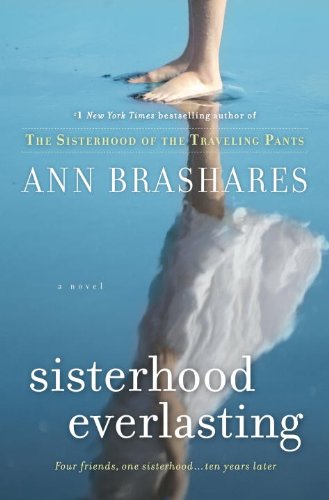
Waiting on Wednesday - Sisterhood Everlasting
I hardly ever do a Waiting on Wednesday, but I can't not talk about this one. I absolutely loved the first four in the Sisterhood of the Traveling Pants series and am insanely excited and nervous about this fifth installment that picks up ten years later. As much as I love these girls, it's going to be hard to deal with them not ending up where I wanted them to. I have high hopes for this novel but a huge fear that it won't live up to those hopes. In either -- any -- case, I can't wait to read it when it comes out in June.
Tuesday, April 26, 2011
Review - The Last Little Blue Envelope

After the thirteenth little blue envelope was stolen, Ginny figured her adventures were over. However, when an anonymous guy named Oliver emails saying that he has the last letter, the adventure starts again as Ginny joins Keith, his new girlfriend Ellis, and Oliver in order to find Peggy's last piece of artwork.
I liked 13 Little Blue Envelopes, but I didn't love it. The sequel, however, is a much stronger read and I enjoyed it quite a bit more. Unlike the first book, there's a steady cast here that lends stability and heart to a very plot-centric story. As she tries to figure out what happens after high school, Ginny's also being blackmailed by Oliver, traveling Europe to pick up the various pieces of Aunt Peg's last masterpiece, and navigating the tricky relationship between her and Keith. At the end of 13 Little Blue Envelopes they were "kind of something," but now Keith has a girlfriend (the incredibly nice Ellis) and instead of telling Ginny, she's left to discover it on her own. The relationship between Ginny and her uncle Richard is a big part of the story this time around. The life Ginny has in Europe, with Richard, shows so clearly what a big part of her life exists across the pond and I absolutely loved it.
The actual plot was great. This time around there are only three places that Ginny has to visit, which makes for a much more relaxed pace and allows for a lot of setting description and atmosphere that really set the stage. Ginny's inner journey was possibly even more interesting than all the traveling and hijinks she got into, if only because there's such a sense of resolution here. Not only is there the closure that comes with being able to read the last letter from her aunt Peg, but also a sort of resolution with Keith and not only an ending, but also a new beginning as she reaches the end of her journey. The ending of this book really is the best sort in that it resolves the current story but leaves open a lot of hope and possibility for Ginny's life from this point forward. And in this way the book not only finishes the story of the envelopes, but also signals the rest of Ginny's life as she contemplates college applications and what her life holds after graduation.
It was great. If you've read 13 Little Blue Envelopes, you probably already want to read this book -- but if you haven't and you're a fan of contemporary YA, Maureen Johnson, or even just quirky coming-of-age novels, I definitely recommend reading it. (Though it does make more sense if you've read the first book before this one.)
The Last Little Blue Envelope comes out TODAY!
Thursday, December 23, 2010
FIVE: Series on My List
I'm not a big fan of series. Either I don't read them because I really honestly like stand-alones better, or I feel like if I buy the first I have to buy the others and I'd rather not make the commitment. I don't think I've read five different series this year, so instead of listing the five best I'm going to list five series I want to read/finish.


1. Matched
Ally Condie
2. Summer
Jenny Han
3. Delirium
Lauren Oliver
4. Confessions of Georgia Nicholson
Louise Rennison
5. Gallagher Girls
Ally Carter
Some of these are series I've already started reading but there are more books out than I've read, and others are ones I haven't even started yet but really really want to.
Saturday, December 11, 2010
Best YA Couple of 2010
Alexa, over at Not Enough Bookshelves, is doing a countdown of the best couples in YA for 2010 and I thought I'd share my favorites. For her, it's a countdown to Christmas and for me it's just one Best-of-the-Year/End-of-the-Year post.
I thought I'd have a bunch of couples to choose from, but looking at my Goodreads shelves and the reviews I've written... there really aren't many romance stories on there. Sure, I read a few, but the ones I really loved weren't focused on romance and the most realistic, incredible characters had dynamic stories that don't fall under the category of romance. For the most part the best couples weren't even couples. Or they were, but not until the very end. Or they weren't, but I thought maybe sometime in the future they would be. Yes, I know this is fiction.
So with all of that said, the best YA couple of 2010? (Warning: spoilers for a certain book/series after the jump.)
I thought I'd have a bunch of couples to choose from, but looking at my Goodreads shelves and the reviews I've written... there really aren't many romance stories on there. Sure, I read a few, but the ones I really loved weren't focused on romance and the most realistic, incredible characters had dynamic stories that don't fall under the category of romance. For the most part the best couples weren't even couples. Or they were, but not until the very end. Or they weren't, but I thought maybe sometime in the future they would be. Yes, I know this is fiction.
So with all of that said, the best YA couple of 2010? (Warning: spoilers for a certain book/series after the jump.)
Friday, November 12, 2010
Where Have All the (Stand-Alone) Stories Gone?
As rule, I'm not a big fan of sequels. Sure, there are a few really great sequels, trilogies, and series that I absolutely love, but I'm always hesitant to pick up a book that I know is going to turn into a series.
Especially if it's contemporary.
WAIT. LET ME EXPLAIN. YOU KNOW I LOVE CONTEMPORARY.
Sci-fi and dystopian (especially dystopian) is different; lots of times the story contained in a dystopian novel is too big to tell in one book. These books have world-building, good guys and bad guys, epic battles, and, very frequently, world-changing events. The need a lot of space. A lot of pages. More than one book.
But contemporary novels? The stories in them, more often than not, are one-shots. They're about falling in love or falling apart or finding yourself or losing someone else. They're about family, friends, school, life - and the events that change us, shape us, or make us. These stories are incredible, but they fit in one book. Much of contemporary YA is writing about a person, event, or time, that really matters to the protagonist. Someone or something that changes them, teaches them, or makes them into someone better than they were before. Oftentimes it seems like turning these fabulous stand-alone stories into series just diminishes the impact. It drags out a story that shouldn't keep going. A story that works so great alone.
And it makes me sad to see so many perfectly wonderful stand-alones being turned into or planned as series. Yes, there are fabulous contemporary series; there are stories that need more than one book to be told and worlds where, even if the story can be contained in one book, it's such fun to read more. But there are also a lot of series that shouldn't be, and personally I'm not averse to reading the first book and - even if I love it - stopping there. Because sometimes that's what needs to happen.
Especially if it's contemporary.
WAIT. LET ME EXPLAIN. YOU KNOW I LOVE CONTEMPORARY.
Sci-fi and dystopian (especially dystopian) is different; lots of times the story contained in a dystopian novel is too big to tell in one book. These books have world-building, good guys and bad guys, epic battles, and, very frequently, world-changing events. The need a lot of space. A lot of pages. More than one book.
But contemporary novels? The stories in them, more often than not, are one-shots. They're about falling in love or falling apart or finding yourself or losing someone else. They're about family, friends, school, life - and the events that change us, shape us, or make us. These stories are incredible, but they fit in one book. Much of contemporary YA is writing about a person, event, or time, that really matters to the protagonist. Someone or something that changes them, teaches them, or makes them into someone better than they were before. Oftentimes it seems like turning these fabulous stand-alone stories into series just diminishes the impact. It drags out a story that shouldn't keep going. A story that works so great alone.
And it makes me sad to see so many perfectly wonderful stand-alones being turned into or planned as series. Yes, there are fabulous contemporary series; there are stories that need more than one book to be told and worlds where, even if the story can be contained in one book, it's such fun to read more. But there are also a lot of series that shouldn't be, and personally I'm not averse to reading the first book and - even if I love it - stopping there. Because sometimes that's what needs to happen.
Subscribe to:
Posts (Atom)