Thursday, July 7, 2011
My Favorite Literary YA
So a few weeks back I did this post on literary v. YA and I've been wanting since then to do a post on the crossing of the two genres. I've read a few great literary YA novels lately and I'm starting to feel that there's something really wonderful that happens when literary writing meets a YA novel.
I'm not a plot person. When I started writing my biggest problem was always that not only did I have absolutely no idea what was supposed to happen to these characters, I also didn't really get why anything had to. Couldn't I just write a bunch of kids sitting around shooting the breeze and throwing rocks at things? I mean, really. Now, of course, I realize that everything -- literary or not -- has to have a plot. I still don't quite like it, but I get it.
And though it sounds weird to say, some of my favorite books are still those that make it seem like there's no plot. Like things are just happening and this is the natural progression. Like people really are just throwing rocks at things, so to speak, just going on, living their lives, being whoever they are, loving and fighting and making up. I like when a book can pull me in so far that I feel like the characters are people I've known forever and their world is a place I've always known.
There are two YA novels that accomplish these things so well. One of them is Nova Ren Suma's Imaginary Girls which, despite me loving so so so very much, I still haven't written a review for. Maybe because I don't quite know how to write a review for this one. It's out of my normal range and I've found it difficult to formulate the right words. But Suma's world, populated by a girl with a magnetic personality, a little sister who practically worships her, and an underwater town, is incredible. I feel like I've been living above the town of Olive, like I've shopped at the gas station and seen the reservoir. The characters are fully YA and the writing is fully, beautifully literary. The best of both worlds, in my opinion.
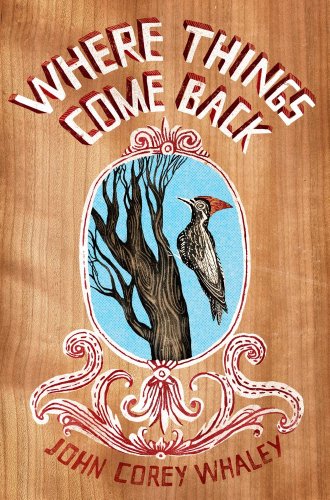
The second book is John Corey Whaley's debut novel Where Things Come Back. As in Imaginary Girls, the setting here is so incredibly real and the characters feel like kids I've grown up with. Something about the voice of the narrator, a teenage boy whose incredible little brother has disappeared, strikes me as incredibly authentic in that even if people don't talk like that, they sure do feel like that. And sometimes, maybe a lot of times, that's what matters. The writing is a bit high brow and a bit stunted small town, which is a strange mix that works so well in this novel.
And there are others, of course. Some readers have suggested Lauren Oliver's Delirium and Kirsten Hubbard's Like Mandarin as literary novels. There's also Holly Goldberg Sloan's vignette-powered I'll Be There and Hannah Moskowitz's sophomore novel, Invincible Summer. So, what about you? What are your favorite Literary YA offerings?
Wednesday, July 6, 2011
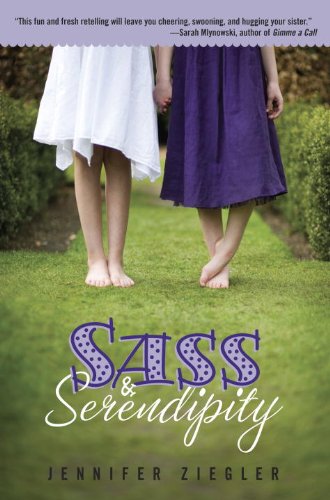
Review: Sass & Serendipity
![]() |
| SASS & SERENDIPITY Jennifer Ziegler Delacorte Books for Young Readers |
It's been years since I've read Sense & Sensibility, but even so I could tell that this novel followed the basic premise and plot. Gabby and Daphne have the most obvious characteristics of the Dashwood sisters -- namely that one is boring and distrustful while the other is flighty and romantic -- and at least in the beginning these traits overtake the characters. At first it was hard to stomach Gabby, a girl whose one friendship (with a boy called Mule) mostly consists of her complaining about... well, everything. Her studies, the prom-obsessed teens around them, and most of all her irresponsible little sister. As is pointed out rather early in the story, Gabby has a mean streak a mile wide. Typically I have a difficult time empathizing with such a mean character, but with Gabby we eventually discover that her reasons for being so mean and distrustful are actually pretty legit. Not only is her family about to lose their home, but she's relied on to help a good deal with finances as well as putting pressure on herself to get a full scholarship. This, added to the "secret" of Gabby's past made for a character that, while I didn't always like her, I found myself able to understand a bit more. And Daphne, though selfish and flighty, was easier for me to understand. She believes in classic-romance-novel love stories and is just waiting to live out her own. She's a girl with a lot of emotions and though her willingness to be her emotional self means often having a selfish attitude, it also means that she often feels on the outskirts of her sex-obsessed, true-love-shunning peers, even those she considers her best friends. And the thing is, though Daphne's selfishness was huge compared to her sister, she wasn't really that selfish. Aside from constantly promising to try and get a job and then bailing at the chance to hang out with Luke, most of her selfishness just equated to wanting to have a "typical" teenage life. Spending her money on a dress for prom instead of helping to pay the rent, having a crush on a boy even though her sister thought she was being ridiculous and stupid. Like her sister, Daphne was dealing with her own issues -- the disconnect she felt between how she wanted life and love to be and how they actually were, as well as not understanding why her parents got a divorce or why she couldn't see her father more often.
As in the original Sense & Sensibility, much of the plot of Sass & Serendipity is focused on the boys in the Rivera sisters' lives, with the financial troubles and family drama as more of a subplot or even plot device. This isn't to say that either of those things are bad, because I actually think that the way this story comes together works very well. The family history isn't delved into too much, but it's still obvious how their parents' divorce has affected the sisters very differently and deeply. While Daphne runs off in pursuit of love in the form of Luke, who she thinks to be perfect, Gabby runs from the very idea of romance. She changes the subject when her best guy friend repeatedly brings up the subject of Prom and accuses a former classmate of being sexist and thinking her and her family weak when he offers to help them move some boxes. There were many moments when I wanted to yell at both of the sisters as they continued to make iffy decisions in their love lives, but the way the book builds and the way each character (even secondary ones) is written makes it easy to understand why each of the girls acts the way she does, even when it seems to be ridiculous. Part of the reason the book can get away with having some fairly silly personality traits and decisions for these characters is because there really is a character arc here. Both sisters change and grow (for the better!) throughout the course of the novel, and these changes never feel forced or contrived.
Though the sisters' personalities were extreme, they were justified and strongly-felt. However, I can't say the same about the setting. This book is set in a small Texas town that both girls often describe as redneck, but it didn't feel like a small town. There was some Texas-style dialogue ("y'all" comes to mind), but the atmosphere of the novel did not feel as if it took place in a specific small town setting. Instead, I got the feeling that this story and these characters could have just as easily lived in the suburbs or a sprawling city. They could have been anywhere and for me, a reader who loves strong settings, I kind of wished the book had taken place just anywhere, in some nondescript place. I would have liked for the plot and characters to take over completely, without having the nagging feeling about the setting being not quite right. But I do realize I'm a bit more particular about settings than most are and overall this was a very cute, successful modern retelling of the classic that I love.
Sass & Serendipity comes out July 12th.
Tuesday, July 5, 2011
Tuesday Ten: Rebellious Characters
This week's topic from The Broke and the Bookish is literature's rebels, defined as "those people who stood up for what they believed in despite the cost of doing so." I really love this topic yet had a surprisingly difficult time with it and wasn't sure how well many of the people I chose actually fit the bill, because a few of my rebels are a bit different than you might expect.
In no particular order...
1. Stargirl
Jerry Spinelli
Stargirl was just so different and the first time I read this book, back in fifth grade or whatever, I didn't quite get it. She just annoyed me. It wasn't until years later when I reread the book that I saw the genius of Stargirl -- this is definitely an out-of-the-ordinary character who in the end refuses to be anything different than who she is. Total rebel girl.
2. Julia James
Ally Carter
This cute, clean romance novel is my favorite Ally Carter book. Julia's rebel streak comes in when the single woman self-help guru, famous for writing books helping erase the stigma of living the solo life falls in love... and then has to decide how to handle her personal life and the career that she still loves. She's such a great character (and a rebel!) not only because of how she handles the possibility of having a boyfriend in her life, but also how whole-heartedly she believes in all of her self-help stuff. I'm sad this book is out of print (and that more people haven't read it!)
3. Guy Montag
Ray Bradbury
The reasons for this one are obvious and if you're someone who, for some crazy reason, hasn't read this book -- I suggest you get on that STAT. That means right away.
4. Peeta Mellark
Suzanne Collins
I love pretty much everything about Peeta and his character is refreshingly consistent, but the reason I think of him as a rebel is because of how startlingly honest he is throughout the Games. Not just honest to Katniss and Haymitch, but to everybody, including television interviewers and the bloodthirsty public. It's kind of insane, honestly.
5. Rhett Butler
Margaret Mitchell
Again, do I really need to explain this one?
6. Atticus Finch
Harper Lee
Atticus is maybe my favorite rebel -- or at least my favorite good-guy-in-the-face-of-badness -- character in all of literature. Not only does he defend a man that nobody else will, knowing full well that winning the case would be a miracle, but he does it while teaching his children the difference between right and wrong, and that the right thing is often difficult.
7. Aunt Peg
Maureen Johnson
Alright, I know Aunt Peg is never actually alive in these books, but I couldn't let a little detail like that stop me from including her in the list. Aunt Peg is artistic in the craziest, most stereotypical crazy-wandering-woman sense of the word. She rebels against everything that's expected from her and even in death she makes her inheritance into a zany game for Ginny.
8. Melanie Hamilton-Wilkes
Margaret Mitchell
I know sweet little Melanie isn't what people think of when they hear "rebel," but she does defy expectations quite a few times. (The main one I can think of is when she suggests putting flowers on the graves of fallen Union soldiers.) Continuing to be friends with Scarlett is a defiance throughout a good part of the book but Melanie, though sweet, never backs down.
9. Julianna Baker
Wendelin Van Draanen
I love Juli. She's awesome. Her rebelliousness comes in the form of, mostly, refusing to allow a sycamore tree that she loves to be chopped down, and her commitment to this is amazing, even if it makes her an outcast among her peers.
10. Frankie Landau-Banks
E. Lockhart
I won't bother explaining this one because if you've read the book it's obvious. And if you're a YA fan who hasn't read this book then all I can say is WHAT ARE YOU WAITING FOR?
Monday, July 4, 2011
Thoughts on Small Town YA
Lately I've been noticing a lot of YA novels set in small towns. Since I'm a sucker for settings and an even bigger sucker for small town settings, this should be awesome. I should love it. And kind of I do love it, but also kind of I don't. It's complicated. I tend to agree with what Donald Maass says about setting in Writing the Breakout Novel, which is this...
Some books set in small towns pull it off spectacularly. The setting serves as a centerpiece, almost a character in its own right. It feels authentic, like a real place, even if it isn't. More importantly, you can really tell that the setting has affected the characters. That they fit -- or don't fit -- in this place. And unless a setting has its own atmosphere and feeling to it, who really cares if a character fits there? How can you even tell?
When a setting is part of the story it should be part of the story. A part of the plot or characters, not an excuse for the plot or characters. I don't think this would bother me except for the fact that so many books I've read recently have had the same type of setting, for the same type of reason, and it doesn't feel real. In an otherwise awesome book a shabby setting can make me shake my head and wish the book was just a little bit more.
Fellow readers (and authors!) -- what do you think of all the small town settings in YA? Like? Or not? Do you feel, as I do, that some of the stories would work better if the setting had been relegated to the backseat altogether?
Also! Here are some YA books (both older and newer) with phenomenal small town settings. Seriously, bravo.
In my experience there is no advantage in either being pro-setting or anti-setting: however, one is at a distinct disadvantage by feeling indifferent to the time and place in which one's story is set. Relegate setting to the backseat or make it the chassis on which everything else rides, but do not ignore it. [bolding mine]That says it better than I can and it illustrates my problem with many of the small-town novels I've been reading: I get the feeling that the settings are being ignored. That they're there, but they don't actually matter. It sometimes seems as if the small town setting is just a device, a reason for the character to go after that scholarship (to get out of the town) or a reason to dislike the (familiar, annoyingly nosy, possibly uneducated) people around. It often feels more like an excuse than a setting, which always ends up ruining a part of the book for me. Because the thing is that a book doesn't need to devote time to talking about setting. It can slide setting to the backseat and let the characters and their story take over completely. But when a setting is involved? Especially one that is specific and often demanding? I want it to live up. I want it to be handled well. I want to get a feeling from it. Because the setting isn't just the size of a school or whether roads are paved or dirt or if there's a mall, but also -- and overwhelmingly -- a feeling of culture, of community. A sense of place. An atmosphere.
Some books set in small towns pull it off spectacularly. The setting serves as a centerpiece, almost a character in its own right. It feels authentic, like a real place, even if it isn't. More importantly, you can really tell that the setting has affected the characters. That they fit -- or don't fit -- in this place. And unless a setting has its own atmosphere and feeling to it, who really cares if a character fits there? How can you even tell?
When a setting is part of the story it should be part of the story. A part of the plot or characters, not an excuse for the plot or characters. I don't think this would bother me except for the fact that so many books I've read recently have had the same type of setting, for the same type of reason, and it doesn't feel real. In an otherwise awesome book a shabby setting can make me shake my head and wish the book was just a little bit more.
Fellow readers (and authors!) -- what do you think of all the small town settings in YA? Like? Or not? Do you feel, as I do, that some of the stories would work better if the setting had been relegated to the backseat altogether?
Also! Here are some YA books (both older and newer) with phenomenal small town settings. Seriously, bravo.
Sunday, July 3, 2011
In My Mailbox: BOOKS!
BOOKS.
For Review: This book actually came to me from the author, who sent me an email pitch. The premise of the story is right up my alley and it sounds super-cute. Hopefully I'll love it.
Bought: I kind of definitely feel bad about the fact that it took me this long to snag Gayle Forman's debut, especially since I've been meaning to ever since If I Stay came out. I'm (predictably) nervous about reading this one because of how much I love her other two books. But I'm also excited and anxious to see what I think of it.
Saturday, July 2, 2011
On the Books I Don't Want
This past week I got a surprise book in the mail for review. It fell perfectly within my review guidelines, yet I immediately knew (based on what I'd heard about the book as well as its back-cover pitch), that I wasn't going to be reading it. There was just too much that was going to bother me. I packaged up the book to send on to another book blogger who's been wanting to read it, but while all of this was happening I had a thought, one that's been slowly brewing for a while.
Lately I've read quite a few books that I either didn't finish or finished but wasn't that jazzed up about. I don't get a ton of review books sent to me out of the blue, but I get enough to realize that the books I get out of the blue aren't always ones I'd otherwise read. A lot of times this is great because there's a good chance I wouldn't have read the incredible books The Extraordinary Secrets of April, May, and June or The Unwritten Rule. It's just that sometimes it takes a lot to get through a review book; not because the books are badly-written, but just because the particular stories/characters/writing doesn't appeal that much to me personally. There have been quite a few books that everyone absolutely adored while I didn't quite "get it." There have been others I haven't finished or have finished out of a sense of obligation more than anything else.
This isn't right with me. I love reading and I want to keep it fun. The second my blog becomes obligatory work is the second a huge part of my love and joy for reading dies, and I don't want that to ever happen.
I love getting books for review; it's awesome. But I do have to set a few ground rules for myself--
Lately I've read quite a few books that I either didn't finish or finished but wasn't that jazzed up about. I don't get a ton of review books sent to me out of the blue, but I get enough to realize that the books I get out of the blue aren't always ones I'd otherwise read. A lot of times this is great because there's a good chance I wouldn't have read the incredible books The Extraordinary Secrets of April, May, and June or The Unwritten Rule. It's just that sometimes it takes a lot to get through a review book; not because the books are badly-written, but just because the particular stories/characters/writing doesn't appeal that much to me personally. There have been quite a few books that everyone absolutely adored while I didn't quite "get it." There have been others I haven't finished or have finished out of a sense of obligation more than anything else.
This isn't right with me. I love reading and I want to keep it fun. The second my blog becomes obligatory work is the second a huge part of my love and joy for reading dies, and I don't want that to ever happen.
I love getting books for review; it's awesome. But I do have to set a few ground rules for myself--
- I'm no longer going to finish a book out of that sense of obligation, that feeling that I "have" to write a review for it. If the only reason I'm reading a book is to write about it, I'm wasting my time.
- If there's a book that I know I'm not going to be reading (or sometimes if I don't finish a certain book), I'll do my best to get it to someone who does want to read it -- blogger, author, librarian... someone who might also write a review or talk about it if they like it.
So, if you're a fellow blogger -- what do you do about "review" books you find it hard to get through?
Friday, July 1, 2011
Review: The Detention Club
![]() |
| THE DETENTION CLUB David Yoo Balzner + Bray |
For Peter and his best friend, making the switch from elementary to middle school means going from popular to being seen as losers. When it becomes obvious that everyone else in the sixth grade has moved on from collecting mica and started going to parties on the weekends, Peter relies on his "out of the box" thinking to come up with scheme after scheme to become popular. Finally he lands on a "detention club," which involves framing influential students so that they can be in detention with him and become friends with him. The problem with this plot is that it takes such a long time to really come together*. Though the title of the book comes directly from Peter's detention plot, a good deal of the book follows Peter as he explores other ways to become popular as well as works on an idea for an invention for a competition. I'm definitely the type of reader who prefers plots to be focused, without a lot of wandering or subplots that often overpower the main plot, and in this regard The Detention Club disappointed me. The various subplots -- involving not only Peter's inventions but also a school thief, his overachieving sister, and his best friend -- often seemed to be fighting for my attention and a few of them seemed very underdeveloped until coming together in the book's conclusion.
Peter himself was a character I wasn't quite sure how to feel about. He was annoyingly arrogant and self-absorbed, but in a way that's completely realistic to the type of kid he was. Having easily sailed through his elementary years, Peter regards himself as much smarter than his fellow students and enters middle school thinking he doesn't need to study or try because things come so naturally to him. He finds out, of course, that middle school is not as easy as elementary school was, but it took quite a while to get there and in the meantime his superiority complex grated on me. While normally I'd dislike this type of character, Peter's age (he's in the sixth grade) gave it a different twist because I recognized bits of my former fellow classmates -- and maybe even myself -- in him and his predicament. It didn't make me enjoy his character exactly, but it did make for a better understanding of him. However, the extent that Peter's arrogance overshadowed his relationship with his best friend felt excessive, especially when it became clear that the best friend considered himself stupid next to Peter. In this area there was definitely relationship growth, but compounded with the other part of the novel that didn't work quite right together, it made for an iffy read. The book is definitely funny; many of Peter's conversations with his best friend seem to be an exchange of witty and weird thoughts. It made me laugh, but it also felt incredibly forced and took me out of the story.
All of that said, though I didn't love The Detention Club, it did have its moments. It's a funny book with offbeat characters, and while I admit I'm a sucker for family dynamics, the role Peter's sister played in the story was very interesting; I only wish it had been a larger part of the book.
*Like a few other middle grade novels I've read recently, this one took a while to really get going, so I'm wondering if this is less a flaw and more just a function of the genre. Maybe MG is a slower read than YA and because YA is what I primarily read I'm more sensitive to stories that take quite a while to get going. Thoughts?
Subscribe to:
Posts (Atom)